This is the second in a series of posts about water safety. To read the post I wrote right after the accident, click here. To learn more about water safety, check out this post.

You know how sometimes you find yourself in a situation where you’re kind of blindsided, where you see something or you hear something and you don’t know what to say or do in the moment? And then afterwards, you think of all the things you wish you said?
That happens to me a lot. I’m not confrontational. I’m a people pleaser. I don’t want people to be unhappy or uncomfortable and have me be at the root of it all. I once joked that if my life were a Sara Bareilles song, it would be, “Say what you want to say…in an email…and then live in panic while you wait for them to respond and wish that you never said anything…” If I hate my meal at a restaurant, I will probably not say anything. If you hurt my feelings, I probably won’t tell you. I’m a terrible delegator because I don’t want to ask anyone to do a job I would hate to do. I would pretty much make the worst boss ever.
I’ve thought for a long time, a long, long time about writing this. I’ve put it off because it gives me anxiety, because I don’t feel like I’m ready, and then I write a Scoop post about fonts or something. But it keeps kind of resurfacing in my brain, consuming my thoughts, until I do something about it. So I’m doing something about it. And, to be honest, I feel a tiny bit sick to my stomach about it.
You know how everybody has their thing? You’ve got your car seat safety friends and you’ve got your Internet safety friends and you’ve got your bike helmet friends and you’ve got your screentime-is-evil friends, and sometimes you have all of them rolled into one person. Well, guys, I’m your water safety friend.
I shared the story of my son’s near drowning in October of 2012 here. Even though I posted right after the accident, I don’t regret it. Sharing was therapeutic, and the many, many words of kindness, most of which I never responded to, mean the world to me. So if I never thanked you personally, I’m so sorry.
But I was in a very raw place. I couldn’t say things the way I think they need to be said because I couldn’t say those words.
Grief is a funny thing. Even though we didn’t lose him, we came awfully close and I went to a really dark place. I don’t think that made sense to most people, even myself, because he was okay. It was like it happened and then it was over, but it wasn’t really over, you know? I spent a lot of time on the internet googling drowning. What happens. How long does it take. I call it grief porn, because even though I knew it was something that was exploiting my emotions and probably not good for me, I felt drawn to experiencing and re-experiencing all those emotions until I was tapped out.
I became angry, not really at anyone or anything, just intensely, rage-fully angry. It was like that was the only emotion my mind could process, so I did it at full-throttle.
I stopped feeling anything (besides anger) for a good year. In a desperate attempt to feel something, I watched Toy Story 3, which sent me over the edge for a good three weeks when it came out in theaters, and I left shrugging my shoulders.
I became convinced, completely neurotic, that something bad was going to happen, particularly to my youngest. Every time I put him down for a nap or left him with a babysitter, every time we got in the car, I thought that was it. I became totally and completely (and irrationally) paralyzed with fear. I seriously bathed him in a baby bather until he was 9 months old and practically walking out of it.
Finally realizing I needed help, I went to a counselor, who diagnosed me with PTSD. She was very nice and I liked her a lot, but then Clark started having panic attacks (everyone who told me that it would be way harder on me and that he would bounce right back have never met the most intense child on Earth) and I felt like I needed to focus on him. Whether or not that was the right decision, I’m not sure (actually, I’m pretty sure it wasn’t the right decision, but I felt like I only had so much time and so many emotional resources), but we focused on getting him through that rough patch.
So now? We’re mostly good. We all have our moments, and sometimes something as simple as a smell or a song can trigger those overwhelming feelings of anxiety. But we’re good. A very wise social worker in the hospital told us that he absolutely had to get back in the water, not just because it’s a crucial life skill but because if we didn’t, it would be this monster that would haunt him for the rest of his life.
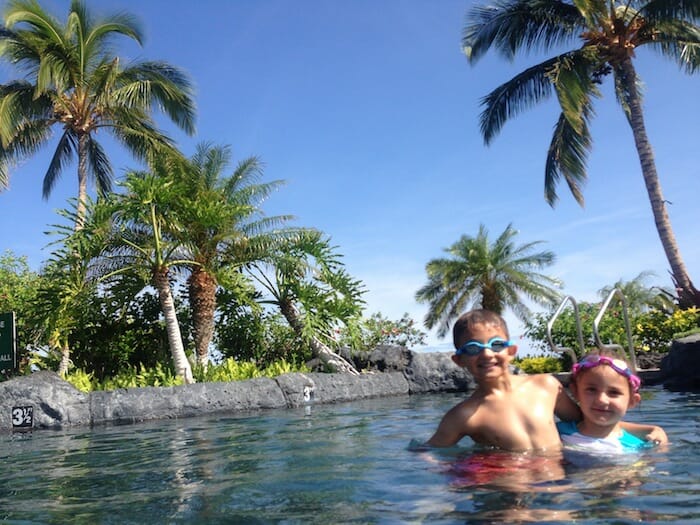
So he’s taken several rounds of swimming lessons and it’s become something that he loves. Usually.
So why am I telling you guys all of this? For a couple of reasons. I want people to know that even though he’s okay, it didn’t come without incredible emotional implications like guilt, fear, anxiety, anger, and isolation. I want people to know that things could have very easily gone in another direction, that we were exceptionally blessed/lucky/whatever, and that most people who come that close don’t make it, at least not without devastating side effects. I want to talk about what it was like, what it was really like, and I want to say all those things I wish I would have said, in hopes that we can save another family from an experience like ours.

I think most people have seen the “Drowning Doesn’t Look Like Drowning” article. I shared it when I shared Clark’s story before. If you haven’t read it, you really should. If you have read it, it’s worth looking over again.
But.
What about afterwards? Because just as easily, you could say “a drowning rescue doesn’t look like a drowning rescue.” Sara and I have both said that if more people had seen what it is actually like, they would be infinitely more cautious with their kids around water.
If you guys watch Mad Men, you might remember a scene in the most recent season where Don is at a party and is partaking of late-1960’s-ish substances that he shouldn’t be. In a hallucination, he walks up to the side of the pool and sees himself floating face-down with his arms extended. Then someone jumps in and rescues him and pulls him out of the water and although things clearly are not good, his coloring is Jon Hamm-ish beautiful and they lay him at the side of the pool and smack him a few times and he coughs up some water and then puts on a robe and goes and sits in a chair.

That’s not how it happens.
When my daughter told me that Clark was under the water, I asked her if he was playing or if he was in trouble and she told me she thought he was in trouble. When we turned around, he was on the floor of the pool, face-down, with his arms extended, just like you see in pictures. It still haunts me.
At the side of the pool, Clark was purple, from his nose all the way down through his chest. Once Sara’s husband resuscitated him, he didn’t just expel pool water. There were a lot of hysterical, extreme emotions, not just from us, but from many in the pool area, whether or not they knew us. It was ugly, it was intense and terrifying and messy and nothing like TV or movies.

- Drowning is the #1 killer for kids between 1-4, #2 behind car accidents for kids between 5-9, and #3 behind car accidents and suicide (!) for kids between 10-14.
- Drowning is silent and generally involves very little motion because the body is thrown into survival mode. No yelling or splashing or thrashing.
- Slipping under the water can happen in just a few seconds. The body loses consciousness without oxygen in 1-2 minutes, sometimes sooner depending on how hard the person was exerting themselves.
- Small children can drown in an inch of water.
- Even kids who have been good swimmers in controlled environments (like Clark) can panic when things suddenly don’t go as planned.

When Clark slipped under the water, I was looking up directions on a map on my phone. I got sidetracked by a funny text. Wanna know how long that took me? I timed myself. About a minute. So I timed myself doing other stuff. Going to the bathroom? 3 minutes. Making my bed? 3 minutes. Unloading the dishwasher? 7 minutes. Watching a kid swim across the pool and back? 2 minutes. Reading and answering a simple email? 4 minutes. Talking to my sister on the phone? 12 minutes. Comforting my daughter who got confused about sleepover dates? 5 minutes. Then try holding your breath and you’ll see how desperately quick that time goes by.
I have a dear friend who lost her son to drowning and she compares kids and water to kids and heavy equipment like chainsaws–you would never, ever take your eyes off your kids around stuff like that, and you never can with water.

Last summer, on Facebook and Twitter and Instagram, I saw all sorts of stuff pop up about pools and lakes and water and I wished I’d had the guts at the time to say something, but I didn’t. Not to make anyone feel bad; I truly don’t want anyone to feel bad or like I’m judging them because I’m not; I just want people to think, really think, about how dangerous the water can be (along with being fun and necessary, which is part of why drowning is such a prevalent problem). If our experience can prevent this from happening again even once, I’ll take it.
- I wish I’d said that arm floaties, noodles, air rafts, and anything other than an actual US Coast Guard-approved life jacket are not safe and create a false sense of security. Unless kids are great swimmers and are just using them for fun, these things shouldn’t be used.
- I wish, when people said they sent their younger kids to the pool with their 12-year-old that they would realize that a 12-year-old isn’t physically or emotionally capable of caring for many small children near the water.
- I wish I had said that lifeguards are there to administer emergency assistance and not to babysit.
- I cringe when I see pictures of adorable summer toes and a great summer book and a refreshing summer drink while kids play in the pool without their parents.
- I cringe when people talk about singlehandedly bringing their 5 kids and someone else’s brood to the pool by themselves. You’ve got two eyes that point in the same direction and two arms; until some of those kids are old enough to pass a life-saving course, there are not nearly enough people there.
- I am totally uncomfortable with summer day camps for younger kids that involve swimming as an activity (I’m not talking about swimming camps where kids are learning swimming skills, but just where they go play in the pool. There was a drowning like this in my area a few years back with a teenager who was not a strong swimmer.)
- If I could go back and tell my pre-near-drowning self something, it would be to ask what the heck I was doing holding a three-month-old baby with my feet in the water while my kids swam in the pool. What would I have done if no one else had been there? My sheer presence would not have saved anyone. Where would I have put the baby? What would I have actually done?
- I’m not afraid to say that unless it was a one-on-one swimming lesson, I am not at a point where I am comfortable with any of my kids being in the water without me being right there.

I ask that you decide to comment to keep things nice. I’m not writing this from a mean or judgy place, I’m writing it from the most tender recesses of my heart. Likewise, if you have something mean to say to me about our experience, even though it’s been a year and a half, it will still hurt and I will still probably delete it, not to be an evil censoring overlord or to have you only say nice things to me to make me feel better about myself but just, well, because.
But first and foremost, as we get closer to summer, as you guys start your family vacations and beach trips and lake trips and pool parties, I hope you guys will take this to heart. I hope you’ll stand up and be vocal when you see people being unsafe near water. I hope you’ll take charge and designate someone to watch the pool at a party if it hasn’t been done. I hope you’ll get in the water with your kids, regardless about how you feel about yourself in a bathing suit or how tired you are. If you can’t give 100% for whatever reason, save the pool for another day. I hope you’ll teach your kids these things so when you aren’t there, they’ll know, too.
I love you guys. I really do. I feel like so many of you are my friends, so thank you for all your continued love and support. Here’s to a fun, happy, and safe spring and summer!









Questions & Reviews
Such a powerful story, and unfortunately one that is too familiar to many of us. Things truly can happen in the blink of an eye, no matter how diligent we are. When my daughter Jessica was 4 we were boating on Long Island Sound and tied up with several other friends’ boats. We were all eating and socializing and of course all the kids had on life jackets. Well, Jessica and her cousin Alex were playing on the swim platform and she fell into the water. I saw it happen and even though she had on a life vest, she plunged underwater and swallowed a lot of water. There had to be at least a dozen people around, but I was the only one who saw her fall in. I was able to pull her out of the water but we were both so scared and shaken up. She is 31 years old now and she still remembers this incident. She says she can still remember being terrified, and remembers me pulling her out by her hair (it was the first thing I could grab!). Thankfully both of our stories ended well, and my heart goes out to those whose lives have been changed forever due to a tragedy like this.
Thank you so much for posting this. It helped me to re-evaluate how I am around the water and determine to be much more safe with my own family, and with church activities/parties/etc. Your story helped me to realize just how real drowning can be and how it’s not just some distant story that only happens to other people. Really, thank you. You are amazing for being determined to help other people even when it may result in some personal discomfort – that takes courage. Thank you.
Thanks Kate! It is always good to have this reminder. I live in AZ and pool safety is really big here. I think what you have said about constant supervision is the biggest factor. Another added layer of protection that I personally love is the ISR program. They teach kids from 6 months to 6 years survival skills in the water. It is intense but its amazing to see what the kids are capable of. Its not available in all areas but it should be. The website is http://www.infantswim.com/
I haven’t read all the comments so someone may already have said this: Teach your children to swim as soon as possible! Most children can learn to swim when they are 4 or certainly by age 5. Of course you must still watch them like a hawk but if they know how to swim, you’re that much better off. I have nephews who are ages 6 and 7 who don’t really know how to swim. Why? Because their mother is afraid they will drown! Such a Catch 22 situation but one that is perpetuated in this particular family. The mother of these boys can barely swim and worries with good reason that she couldn’t rescue them if they got in trouble. Why? Because her own mother didn’t let her learn to swim because the mother was afraid her daughter would drown! Oh my. They do go the beach and pools but aren’t allowed out of the shallow end. This is an accident waiting to happen.
I will think of this post every day that I’m at the pool this summer. In our neighborhood pool, I’m very often the only mom in the water with my kids. That’s partly because I have more kids with a bigger age span, but it’s also because I’ve seen every one of my kids slip off the steps or lose their balance and go under. It’s quick and it’s quiet and the only way to be able to pull them up quickly is to be right next to them and to be watching them. Because I’ve always been right there when it happens, I’m not (very) traumatized by it and my kids get just scared enough to learn to be more careful, which I consider a good thing. But it would be totally different if they had to stay under while I tried to get to them from far away. This summer I will remember your post and be braver about telling some of the other moms to get in with their children and I will be less sad about missing the chit-chat time with my friends because I need to be in the pool.
Also, I can’t believe that for over a year you served us delicious recipes with a side of wit while you were suffering and angry. We owe you! Thanks for all the recipes and especially for this incredibly important post.
Your story is refreshing. Miracles and happy endings are few and far between in these situations.
Please go to Infant Swimming Resource and look up your nearest instructor. THIS honestly is the most safe layer of protection against drowning for your children and family. While all other layers are very important and needed without this layer of survival swim skills for those ages 6 – 6 years or older if the child cannot get in and out of water above their head alone.
Best
Kate, thank you for such a courageous post with such raw emotions. You are so brave to post this and I thank you. My child almost drown in a backyard swimming pool while I was 3 feet from her AND she was wearing a life jacket. I couldn’t agree more with every point that you made. If this post change the view of just one parent and that ends up saving a childs life, then it is well worth it. Thank you.
I was a lifeguard before I had my son. A camp I used to work at had open swims where there was a guard on the docks and one for every 10-15 in the water. It should have been 4. Watching 10 kids from in the water? Trying to keep them all within arms reach? Impossible. But at 16, I wasn’t going to complain to my boss about it.
Also, lifeguards can start guarding at 14. Not to brag, but I was a good one. When something happened, the emotions were gone and my training became instinct. Most kids freeze on their first… second… tenth rescue. I’ve seen it over and over and over again. And the main job of a lifeguard is prevention, so you might only see three real rescues (like, more than a bandaid) in your entire lifeguarding career, especially if you’re only working part time, as most do.
Also, these kids don’t always have the best judgement. I became waterfront coordinator at a very small camp with only three lifeguards when I was 19. This was the first camp I went to where we didn’t have water on site, so we took them to a public beach. One guard had to stay on shore with the first aid kit. The other two were in the water with 30 kids, in the chaos that is an public beach. Thankfully we didn’t actually have an incidents there, but the guards (not the kids) kept being upset with me for forcing them to stay where they could touch the ground, even knowing that I was doing it to avoid the undertow and make sure that the guard with the first aid kit could actually get to us if she needed to.
Just… don’t rely on the lifeguards. Even if you know them personally, you probably don’t know how they function in an emergency.
I don’t think you’re all that unique in your post-accident fears. I’m a relatively laid back mom..as in I never thought of myself as a helicopter mom. But, after my son drown I found that I worry much more about my kids than I ever used to. I remember about a month after it happened, my husband took my kids on a boat. It was really hard for me to let them go. I kept thinking that bad things happen to our family, and it could happen again. Its been really hard for me at times to balance the idea that I want my kids to be independant….even as small children…and yet I want to make sure they are safe. Hovering is just as bad as not watching them enough. I still haven’t quite figured it out. I never went to counseling, and I probably should have….maybe I still should. Glad you’re working through it
Thank you for posting this. I missed your first post, and this is such a timely reminder as the weather warms up. As my daughter gets older I know I’ve gotten more lax about keeping my eyes on her while swimming or playing at the beach, but you have reminded me just how necessary it is. Again, thank you!