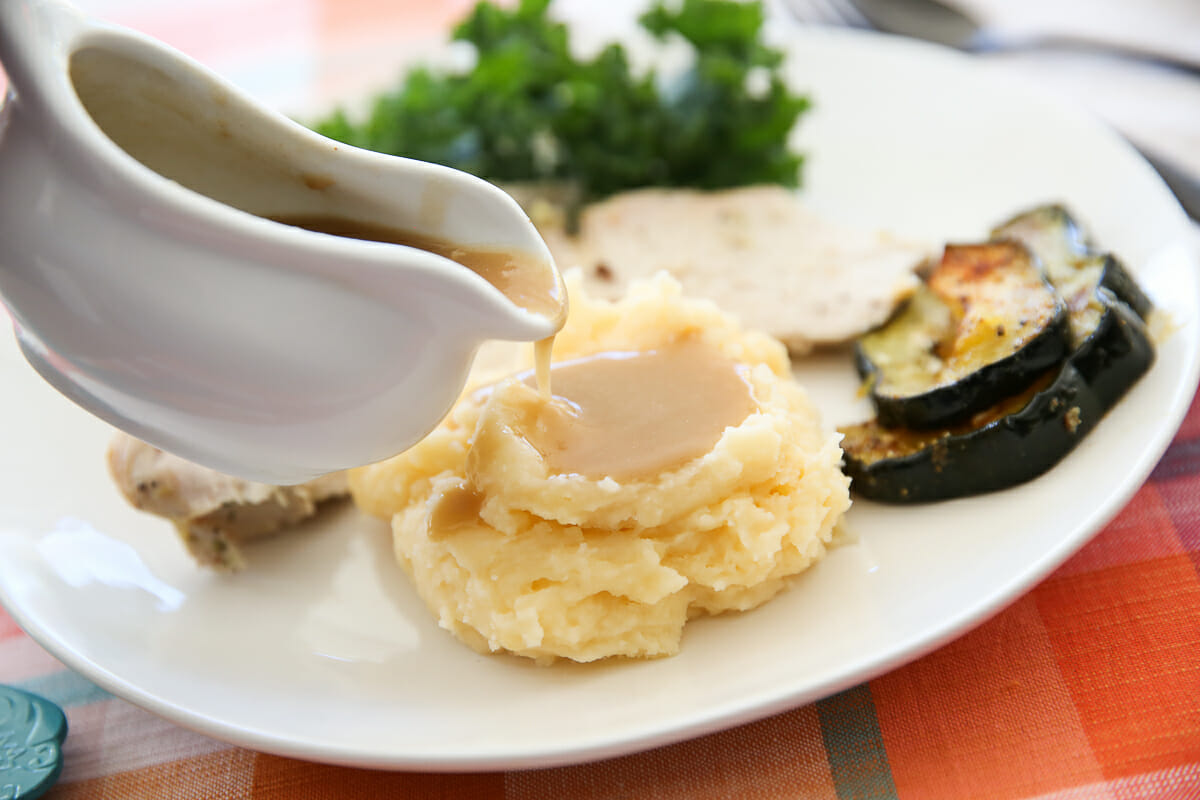
Some might argue that the gravy is the most important thing on the table, because somehow it ends up on everything on your plate. The simple steps in this tutorial will show you just how easy it is to make amazing homemade gravy from simple ingredients!
Ingredients and Equipment Needed
Ingredients
- Butter – I recommend real butter here if you don’t have any dietary exceptions that prevent that. You could also use turkey fat here, but I prefer the flavor of the butter. If you’re making any sort of bacon-wrapped meat, bacon grease works beautifully as a gravy starter as well.
- All-purpose flour – There’s a reason we’re not just tossing cornstarch in here- a butter and flour based roux provides one of the main flavor components. See the frequently asked questions later in the post for notes on gluten-free flours.
- Broth or pan drippings – See the Liquid Options section below for more information and options.
- Kosher salt and black pepper
- Additional flavoring agents as desired – Fresh herbs, seasonings, vinegar, Worcestershire, etc.
Equipment
- Sauce pan
- Whisk
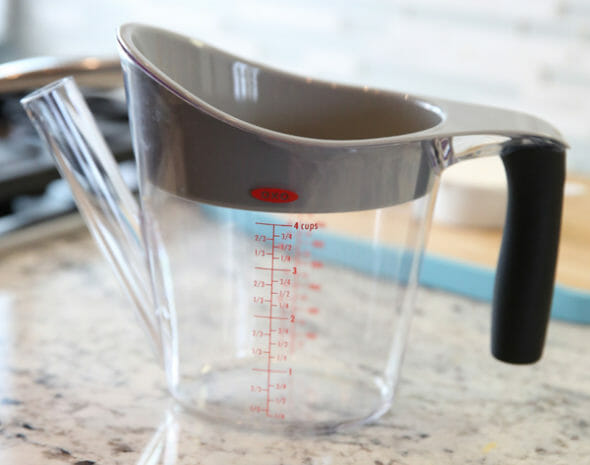
- Fat separator – If I were Oprah-rich, I would buy one of these fat separators for each and every one of you right this second. This is one of my most favorite kitchen gadgets. They’re not very expensive, and I love OXO’s because it’s made from sturdy plastic (as opposed to breakable glass, like some of the competitors.) This isn’t an ad, I just really recommend these. Are you wondering what exactly it’s for? When you cook meat, like a big roast, or a turkey, for example, you’re left with a pan full of delicious juices, mixed with a layer of greasy (yet delicious) fat. You need to get rid of that fat in order to get to the juices (a main ingredient in gravy). You can skim it off, but this makes it so much easier.
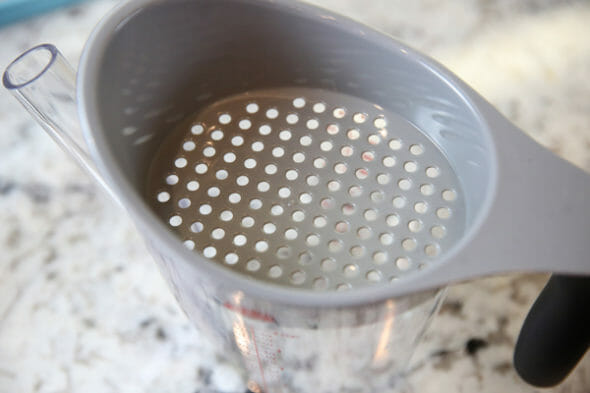
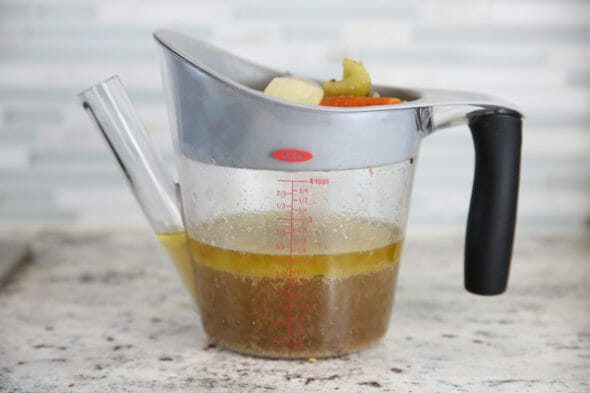
There’s a large hole strainer on top to strain out any big chunks. All you do is pour all of the juices and fat in there together. Just quickly empty out that pan. Fat will naturally rise to the top as it settles. If you do this with a normal measuring glass, when you start to pour, you’re pouring the fat. Notice on the fat separator, the spout connects at the bottom, so you just pour out the flavorful juices and can easily stop when you get to the fat. I seriously use this thing all the time, and you might want to pick one up before Thanksgiving- it will come in handy!
How to Make Homemade Gravy
Basic gravy starts with a roux, which is a mixture of cooked butter and flour that will naturally thicken liquid.
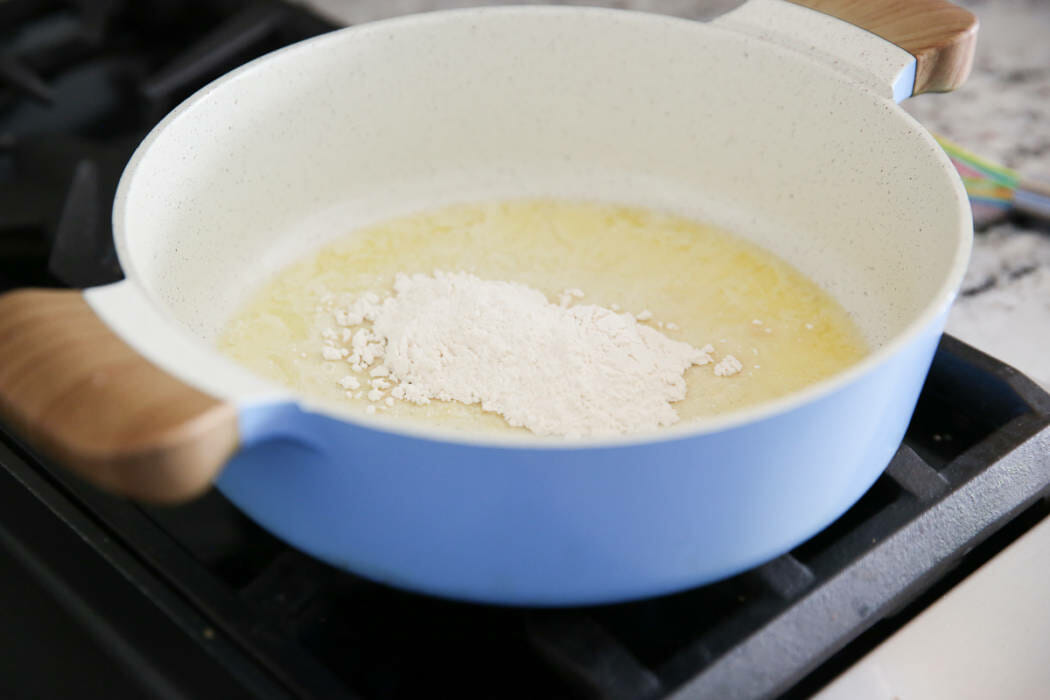
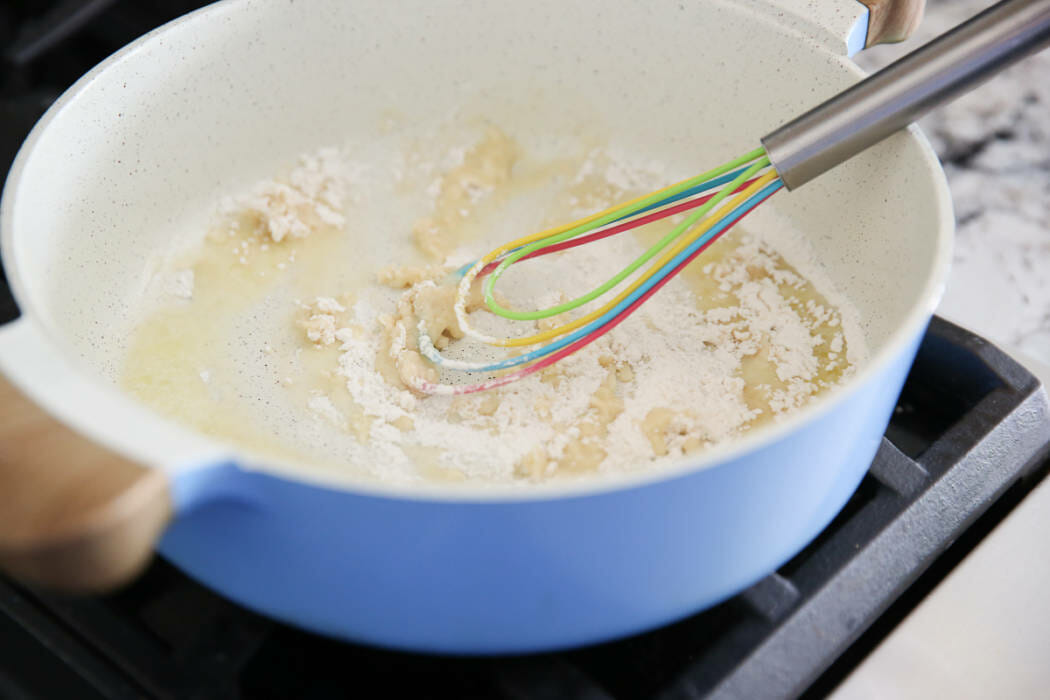
- Melt 4 tablespoons butter in a sauce pan and add 4 tablespoons all purpose flour. Use a whisk to combine it into a smooth mixture.
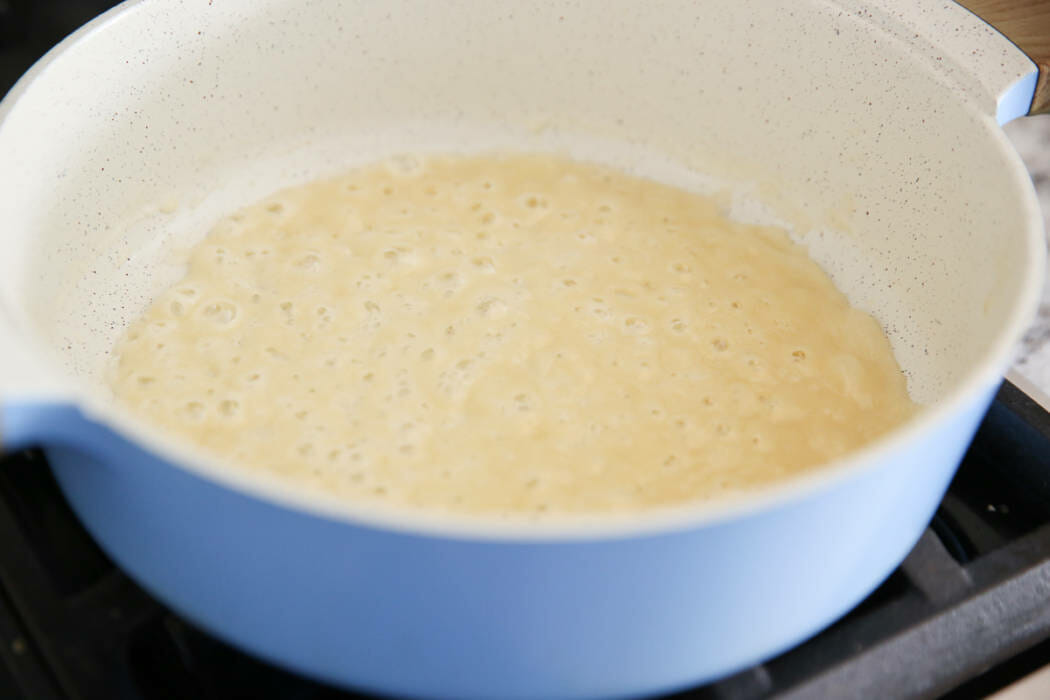
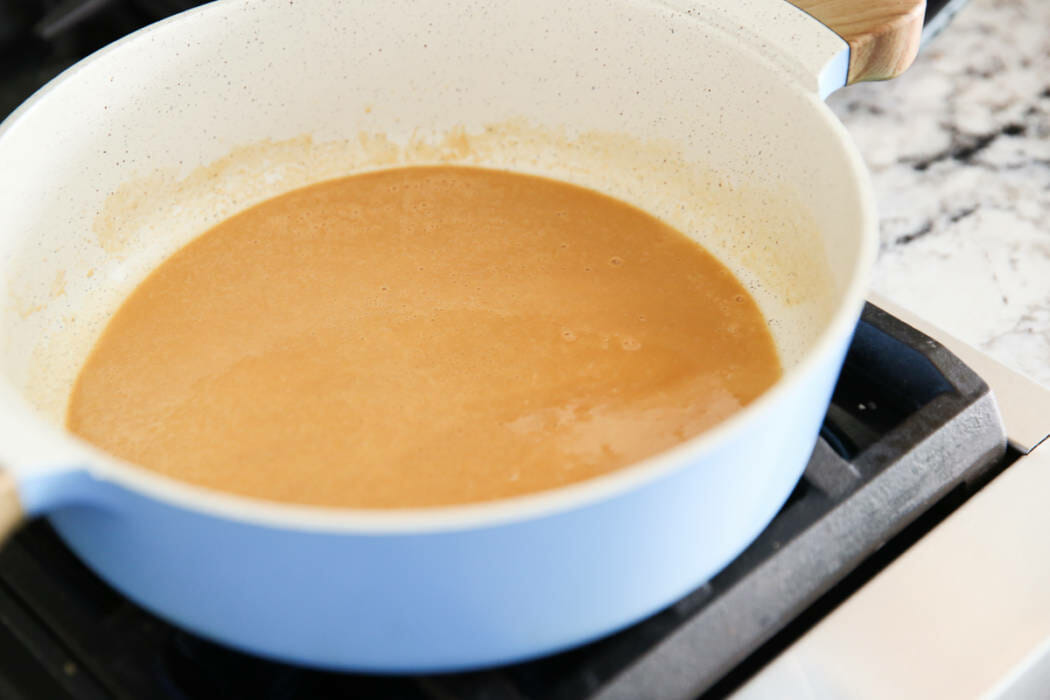
- Stir/whisk it constantly as it bubbles. Here’s something to know about a roux: it should basically match the color of your finished product. So if you were making a white sauce, you could cook it for a couple of minutes until it looked creamy and pale. For our gravy we want a nice caramel color.
- Cook until deep caramel in color. But for beef or poultry gravy, you want to cook it longer, being careful not to burn it, until it’s a golden caramel color. Basically the color of gravy. It will smell amazing, almost like dessert. When your roux reaches that point, it’s time to whisk in your liquids. You can use pan drippings, broth/stock, or a combination of both. See the Notes on Liquid Options below for more info on that.
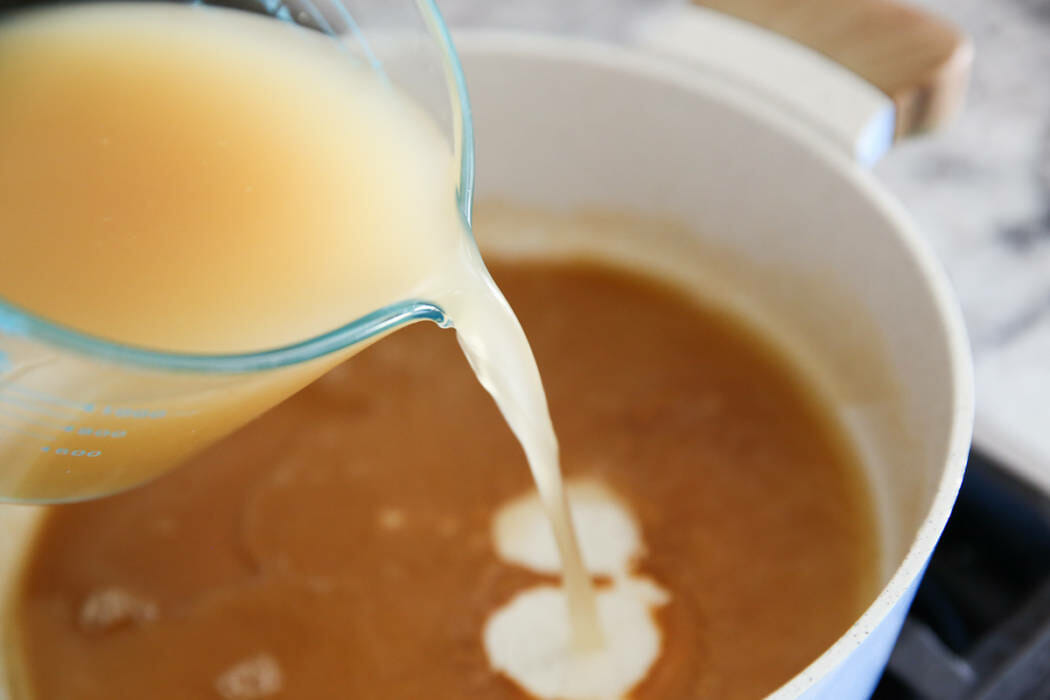
- When your butter/flour mixture is ready, start adding your liquid a very small amount at at a time and stir constantly. Don’t be scared when the mixture seizes; that’s natural. It will get very clumpy at first, which is why it’s important that you just keep whisking constantly. It’s also important that you only add a small amount of liquid at a time and don’t add more until you’ve whisked it in smooth. If you dump in all your liquid at once, it will most certainly be lumpy!
- When your butter/flour mixture is ready, start adding your liquid a very small amount at at a time and stir constantly. Don’t be scared when the mixture seizes; that’s natural. It will get very clumpy at first, which is why it’s important that you just keep whisking constantly. It’s also important that you only add a small amount of liquid at a time and don’t add more until you’ve whisked it in smooth. If you dump in all your liquid at once, it will most certainly be lumpy!
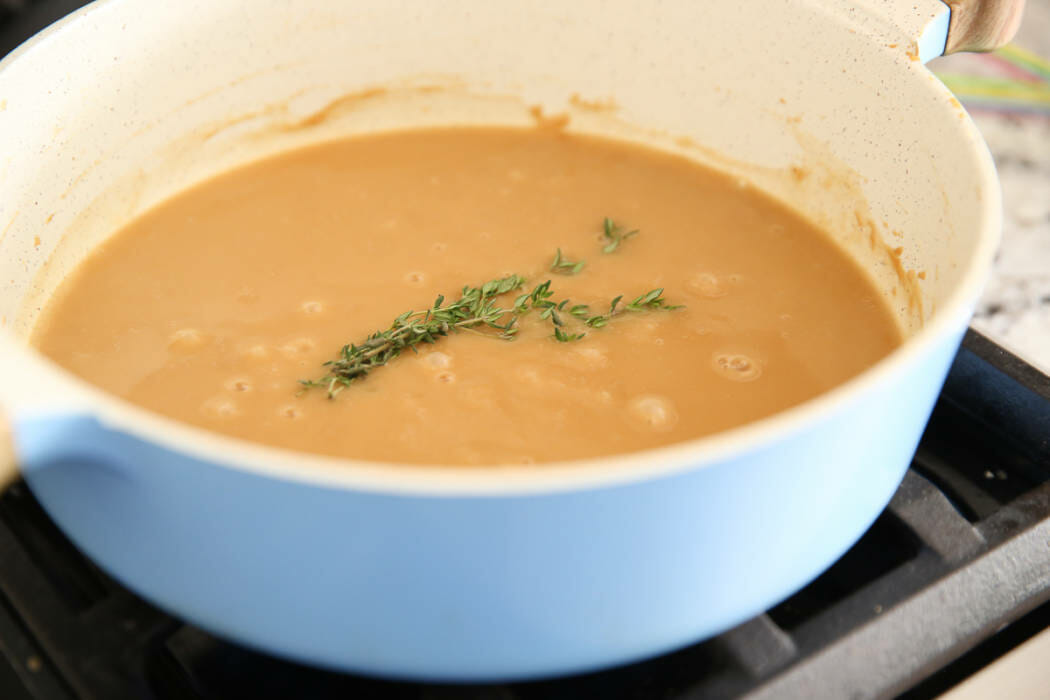
- Simmer Gravy to thicken. Bring the gravy to a simmer and let it bubble away to thicken for about 5 minutes (this is a great time to drop in some fresh herbs if you’d like to). This is your basic recipe. From here, you can customize it. It’s nearly impossible to follow and exact recipe for gravy because everyone’s pan drippings will taste different. So from here, definitely season with salt and pepper first, if needed. Then taste it and see what it needs. I always, always add a splash of Worcestershire sauce. I like a little bit of acidity to balance out the flavors, a splash of red or white wine vinegar also works great. If you’re serving it with smoked meat, try a splash of liquid smoke in there. You can add chopped fresh herbs, and any other seasonings you like.
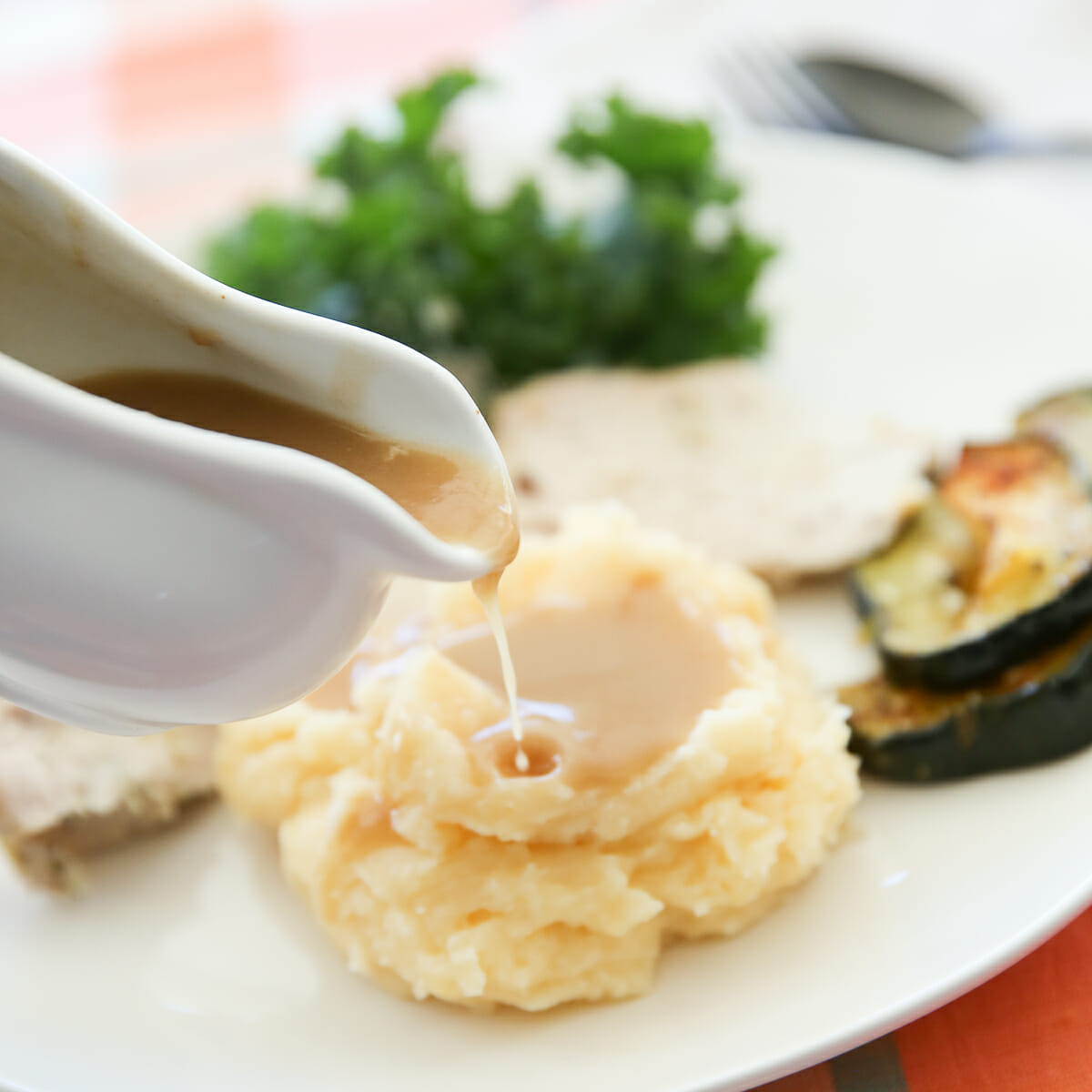
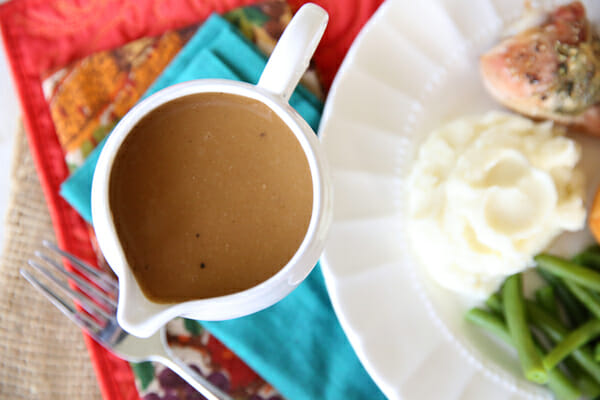
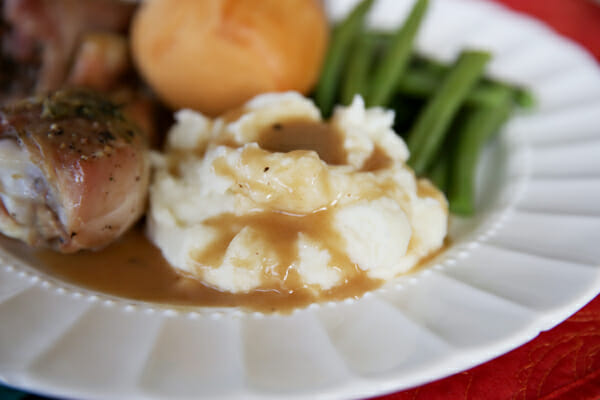
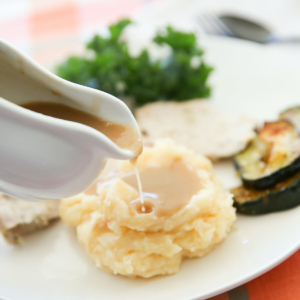
- Remove from heat, transfer to a serving dish, and drizzle generously over whatever you’d like, but especially mashed potatoes. Because there is nothing like rich, buttery gravy over a creamy bed of potatoes! And possibly my favorite thing is when everything on your plate ends up covered in it. It somehow totally works.
Notes on Liquid Options
Pan Drippings
The pan drippings from your meat (turkey, roast, chicken, etc.) That’s where that fat separator comes in handy. I always taste my pan juices before adding them to the gravy. Depending on how you cooked your meat, the drippings may be incredibly salty. If that’s the case, take note, and maybe use a higher ratio of broth. If your finished gravy is too salty, there’s some trouble shooting tips at the end of this post. Sometimes you’ll have tons of pan drippings, other times close to none. Generally speaking, I make my gravy with broth, as explained below, and then at the very end I whisk in some pan drippings for extra flavor.
Broth/Stock
If you’re making poultry, use chicken stock, if you’re making beef gravy, use beef stock. There is always the homemade vs store-bought debate. Yes, homemade broth is delicious, but your gravy will still be delicious with store-bought broth.
How to Make Stock and Pan Drippings Ahead of Time
If you’d like to make your own broth/stock, check out this Easy Homemade Chicken Broth tutorial For pan drippings, see the following info.
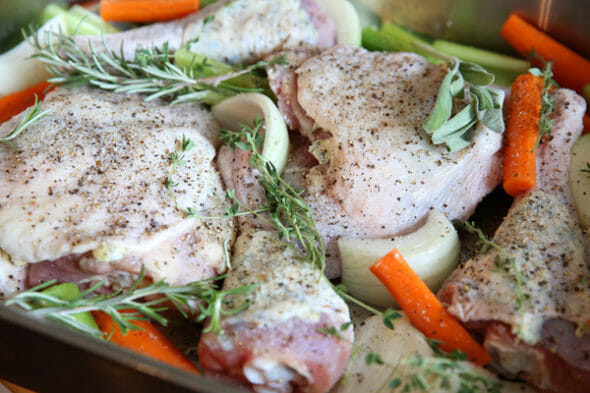
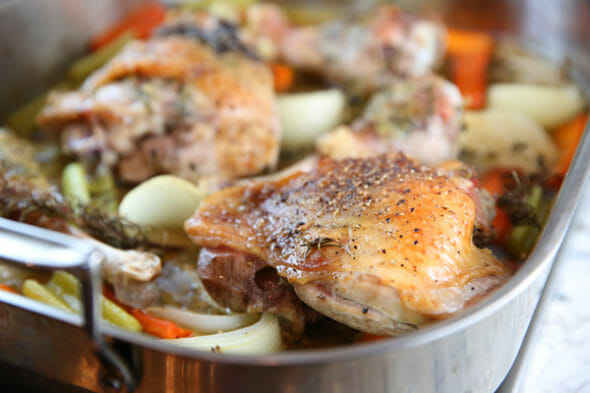
What I did this week, just so I had a little extra for Thanksgiving day, is make a batch of turkey drippings and pop it in the freezer. No one wants to roast a whole turkey for that purpose, but try it with some turkey drumsticks, thighs, or breasts. Keep in mind you get the most juice with the dark meat of the thighs and drumsticks. Place them in a pan with 2 carrots and 3 ribs celery (both cut into about 3″ pieces) and 1-2 onions cut into wedges.
Drizzle all of that with a few tablespoons of olive oil and then season it all with salt and pepper and some fresh herbs like rosemary, thyme, and sage. Cover the pan and roast at 350°F until the meat registers 165°F, removing the lid about halfway through. You’ll get a turkey dinner one night, and juices for a batch of gravy for the freezer!
Storing and Other Tips
- Store finished gravy in an airtight container in the refrigerator and enjoy within 3-4 days for best results.
- You can freeze gravy for up to 2-3 months as well. Just be sure to freeze in manageable quantities that you will actually use and leave enough space in your freezer-safe container for it to expand as it freezes. Thaw overnight in the refrigerator, reheat gently, and add extra broth as necessary to restore consistency.
- Avoid Lumps. No one wants lumpy gravy. It shouldn’t be hard at all to whisk it smooth, but if for whatever reason, you’re having trouble here, and your gravy is full of clumps you can’t seem to get rid of- toss that stuff in the blender. Seriously. Be careful if it’s hot- and remove the stopper from the lid and cover it with a towel, but take the time to save your gravy from lumps.
- Get the right consistency. Everyone seems to have a desired consistency when it comes to gravy, too. If your gravy is too thin, you can thicken it with a little cornstarch slurry. (We don’t want to start with corn starch as our thickener, but it works great at the end to adjust). Too thick? Add more broth. Too salty (especially if you have extra salty pan drippings)? Try a squeeze of lemon juice or even a spoonful of sour cream. The sky is the limit; if you’ve got working taste buds, you can take it from here!
Frequently Asked Questions
Absolutely. See the Notes on Liquid Options section for notes on making Turkey broth and pan juices ahead of time to use in your gravy. You can always just use canned or boxed broth as well.
The simple answer is yes, but gluten-free flour blends will all vary in how they perform here. Some will toast or burn quickly, some might thicken too much, and others not enough. Your best bet is to test out your flour blend ahead of time and see how it goes or find a recipe that’s written especially for those who are gluten-free.
Yes. Cream or sour cream are especially helpful if your gravy ends up too salty. But you can also add them just to give a nice, creamy finish to your gravy. Remember to add dairy products at the very end of cooking to avoid curdling. If you plan to freeze your gravy, it’s best to leave the dairy out to avoid curdling and separation as well.

Homemade Gravy
Equipment
Ingredients
- 4 tablespoons butter
- 4 tablespoons flour
- 2 -3 cups broth See notes if using pan drippings
- kosher salt to taste
- black pepper to taste
- Additional flavor agents: fresh herbs, seasonings, vinegar, Worcestershire, etc.
Instructions
- Melt butter in a medium-sized sauce pan. Add flour and whisk constantly until mixture is golden caramel color and smells fragrant (3-5 minutes).
- Slowly whisk in liquids, while whisking, until mixture is smooth. Bring to a simmer and cook until thickened and bubbly, 5 minutes or longer.
- Taste, and then season with salt and pepper to taste, and add any other flavorings like fresh herbs, or vinegar. A small splash of Worcestershire is recommended (1-2 teaspoons should do it).Having trouble? See troubleshooting tips below.
Notes
Notes on Liquid:
Technically, with the proportions of roux here, this can thicken 4 cups of liquid. That’s a little too thin for me, and I like the flavor of the roux more concentrated, so I keep my liquid to 2-3 cups. You can always thicken more after if necessary. Pan Drippings: Pan drippings are a great way to season gravy. If using, separate fat from juices. Use your juices, in combination with broth, for your liquid measurement. Be careful as pan drippings can sometimes be extra salty.TROUBLESHOOTING
Too thin? Combine 1 tablespoon cornstarch with 1 tablespoon cold water. Mix until smooth and add to simmering gravy. Let simmer a few minutes to thicken, and repeat if necessary until desired consistency is reached. Too thick? Add more broth. Too salty? Try a splash of cream, lemon juice, or even sour cream. You can also make more roux, and use only broth in the second batch to dilute.Nutrition









Questions & Reviews
What??? That’s awesome!! I’m so dang excited to find out more about that bottle. I don’t really love gravy, but this makes me want to try it, lol.
Every time I look at this post, I want Thanksgiving to come faster!! This looks SOOO GOOD!!!
This was a really helpful tutorial. I love the idea of making the gravy waaay ahead of time and freezing it for the big day. Huge congrats on your new line of products! Can’t wait to hear more!
Do you have any suggestions for gluten free gravy? I am in charge of the turkey, mashed potatoes, and gravy this year and my sister in law is gluten intolerant. What do I do?
I don’t really know Lyndsay, but I’ll ask around and see if I can find an answer for ya!
Great tutorial! I love Oxo products and will pick this one up for sure! If the gravy isn’t thick enough, or you thin it too much, can you just make a little extra roux and add that as opposed to cornstarch? Thanks so much! I’m adding your blog to my sidebar!
Cheers!
Yep, you can definitely add more roux.
Thank you so much for the step by step directions for the gravy. I need that 😉 Could you give me an approximate time for cooking the turkey thighs, legs and breasts. You said 165 degrees but when would I start checking. I’m cooking challenged so I will give both these recipes to the hubster! Thanks!
Yea! I’ve been wondering how the olive oil thing was going and have just kept forgetting to ask you. That’s so exciting! And of course, the gravy looks delicious as well. 🙂
It is super cool that Our Best Bites is offering yummy additions to my pantry 🙂 I am definitely looking forward to shopping in your online store 🙂 Are you going to offer Kate’s homemade vanilla too? I would totally buy that 🙂 Also, although Kate “talked” me into buying an entire set of the USA baking pans, if you come out with some I will give my sister my current pans and buy yours anyway, if they compare to those pans (which totally and completely ROCK!! 🙂
Anyway, thank you for the gravy tutorial. Gravy has never been a strong point of mine ~ I’m going to roast some turkey thighs per your suggestion and make it ahead of time and freeze it.
Love to see good things come your way, keep up the good work!
To avoid lumps in the gravy or any sauce, take the pan off the heat while adding flour to butter. This allows you to get the roux nice and smooth, without worrying about burning it. Once smooth place back on heat!!
I must admit using the butter sounds good but I can’t throw out the turkey fat with all that flavour (I disowned a son for doing that one Christmas), so I’ll compromise and use both .. 🙂 There is never enough fat usually anyway for the amount of gravy I want to get. Thanks for the tip.