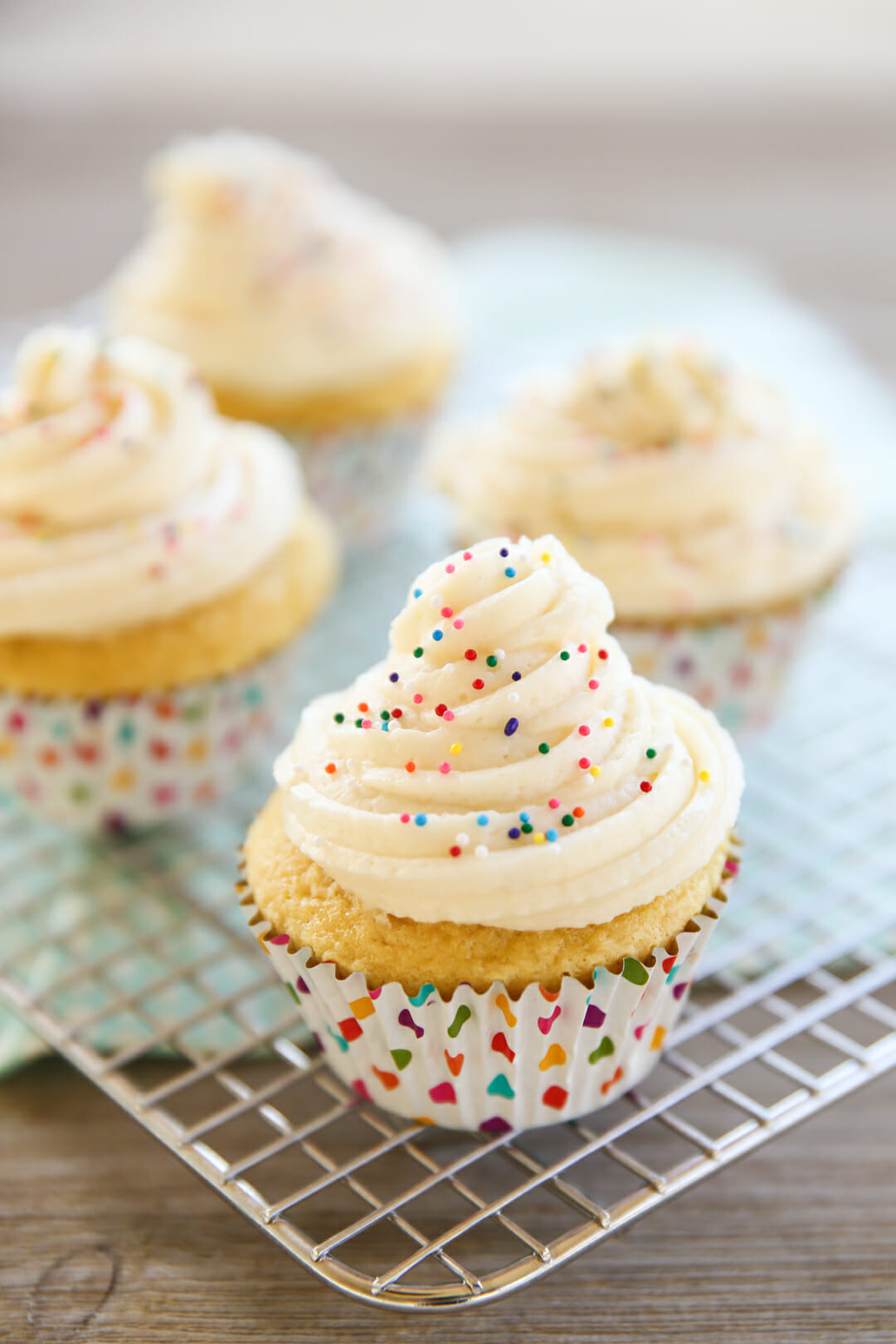
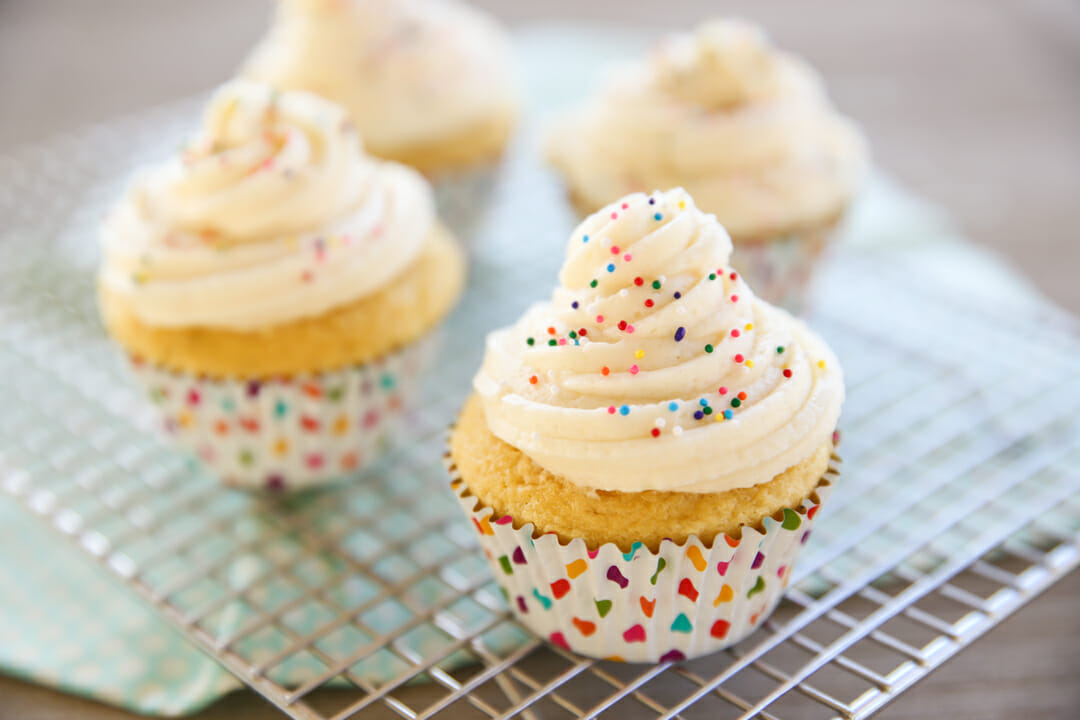
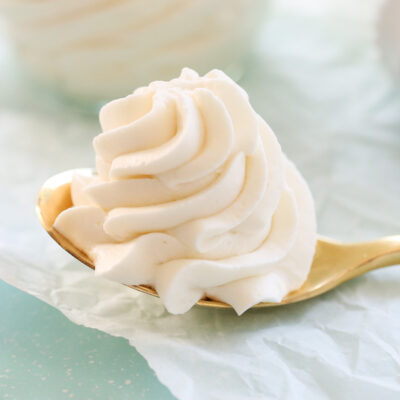
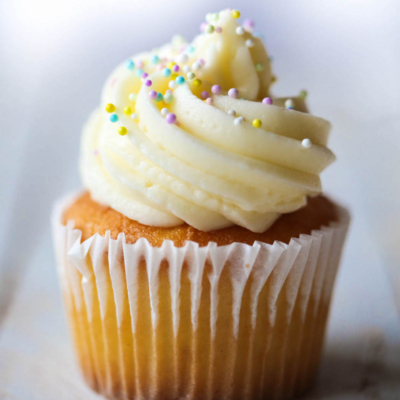
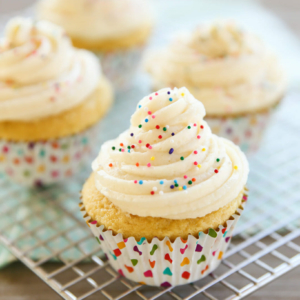
This Perfect Cupcake Frosting and Filling is known as Ermine Frosting, or sometimes referred to as boiled milk frosting, because it begins with a cooked roux of flour and milk. That might sound incredibly strange for a frosting recipe, but trust me! I’d say it’s the perfect frosting. It’s not so thick and sweet that you need a gallon of milk to get it down your throat. It’s mild and smooth, and light as air. I also love it because it doesn’t take away from a good cupcake like other really rich frostings can. It’s often the traditional frosting used with Red Velvet Cake. This frosting has a similar taste and texture to a Swiss Buttercream, but with way less effort. Try this unique frosting recipe and you’ll be hooked!
Ingredients Needed
This is just a preview of ingredients and method, keep scrolling for full printable recipe.
- All purpose flour
- Milk – Whole milk is best, but I’ve used non-fat when it’s all I’ve had and it actually does work ok as well.
- Butter – Use real butter here!
- Granulated sugar
- Vanilla extract – Or other extract or flavoring oil of choice.
How to Make Perfect Cupcake Frosting and Filling
Step 1: Make the Cooked Flour Base
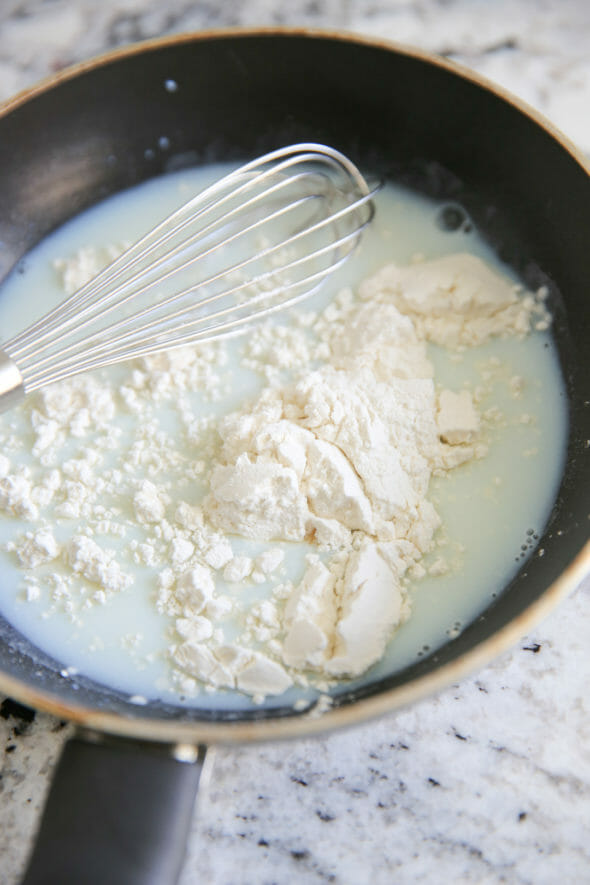
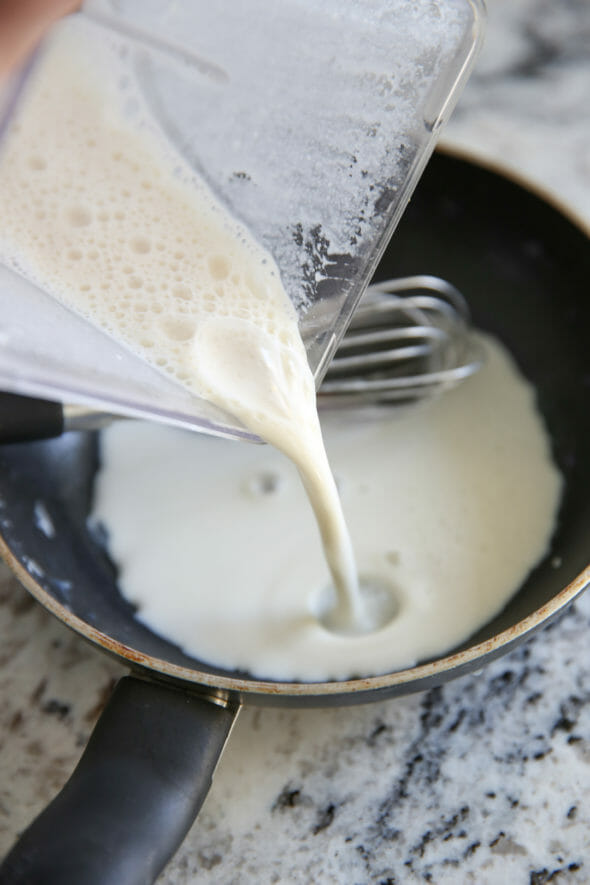
- The frosting starts out with a mixture of all purpose flour and milk. And even though I’m showing it here being whisked together, I’ve actually found you’ll get a much smoother result if you mix this part in a blender first and then pour it in your pan.
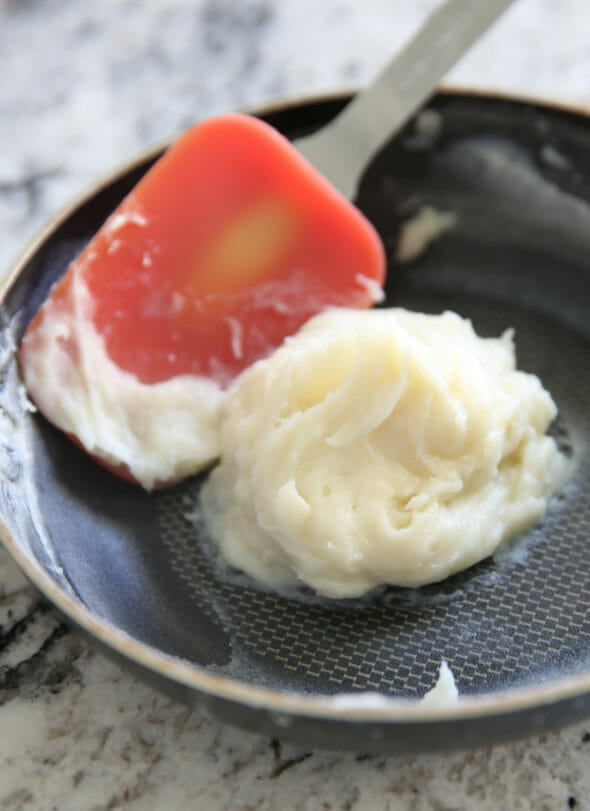
- Now comes the weird part. You’re going to cook this mixture until it gets thick–it happens fast and you’ll want to have a rubber spatula and constantly smash/stir it to keep it smooth. I usually take it off the heat when it looks like this photo above. There are still some wet spots but as you stir it all comes together like this: Don’t taste it. It’s not frosting yet! Pop it in the fridge; it needs to cool completely (I sometimes pop it in the freezer if I want it to cool fast.) Put it in a bowl and smoosh it around and stir every few minutes to cool it off.
Step 2: Mix it up!
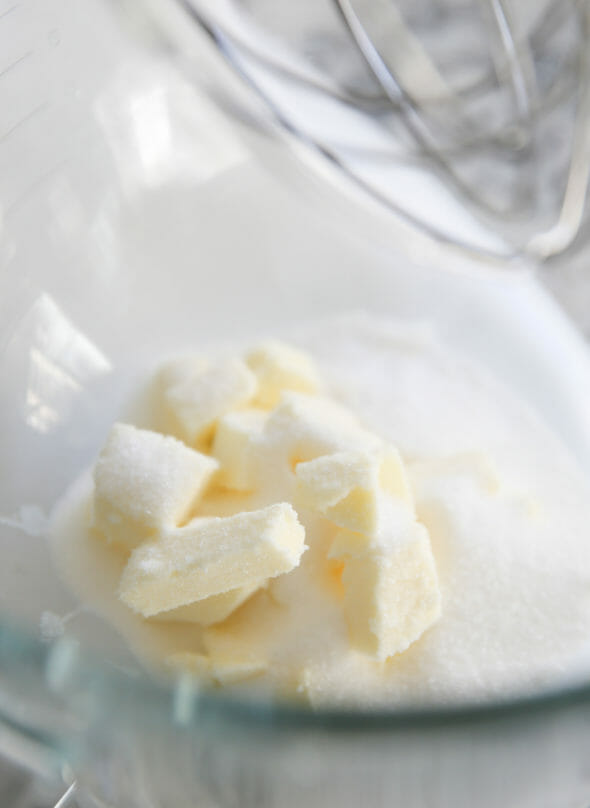
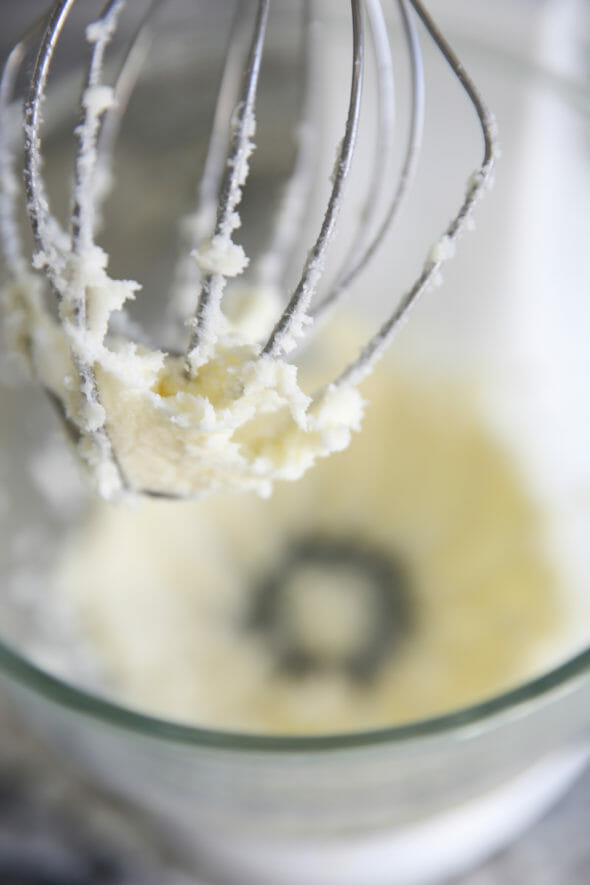
- When the flour mixture is chilled, place some real, high-quality butter (definitely no margarine) and granulated sugar (not powdered sugar!) in a stand mixer. Whip it up for a few minutes so it’s light and creamy. I use the whisk attachment on my Kitchenaid, but any paddle should work.
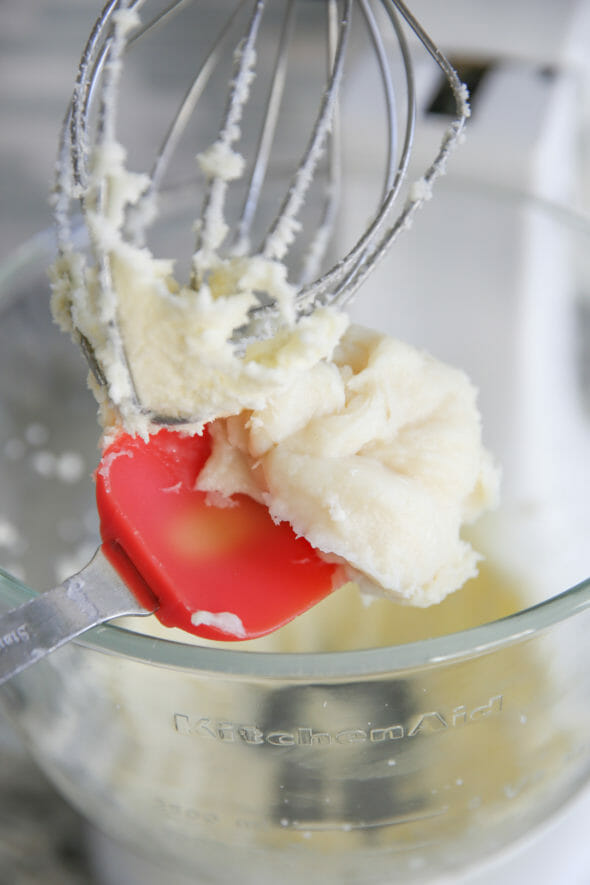
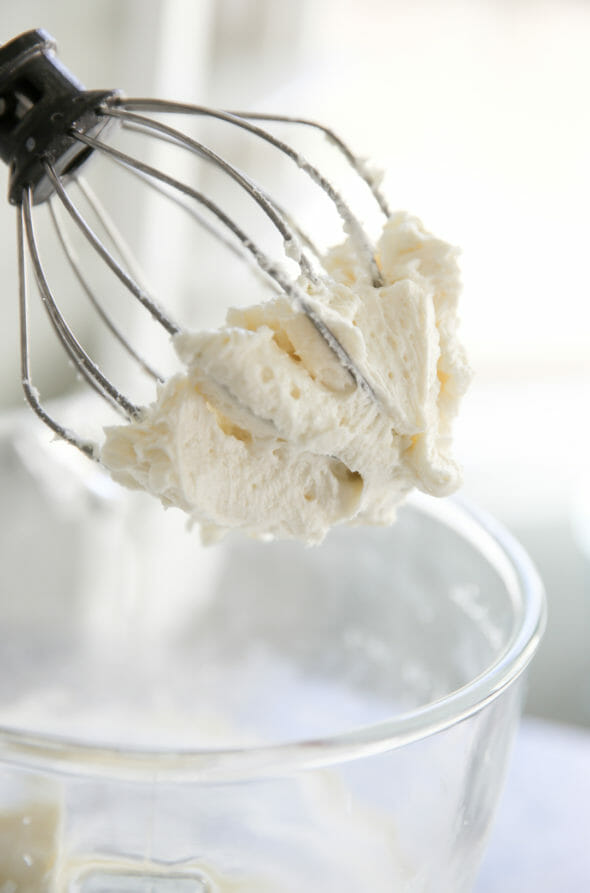
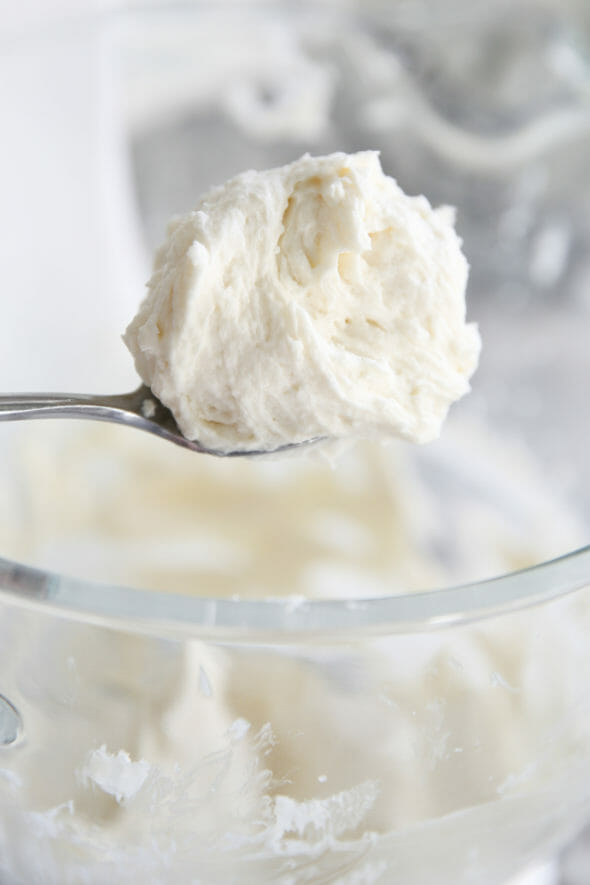
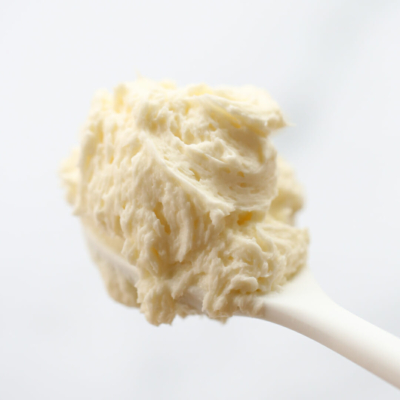
- Then you’ll add that glob of flour. I know. Weird! I’m warning you right now it’s going to look weird at first. Like, what the heck did I do weird. But keep going. You’ve got to whip it for a long time for all the sugar to dissolve and everything to come together. Don’t be startled if it looks curdled. Eventually it will look like fluffy soft clouds of heaven. I usually give it a little taste and if I can still feel quite a bit of granulated sugar I keep on whipping. Sometimes it takes 5 minutes, other times I let it go for almost 10 or so! It’s worth it for this silky, fluffy, magical mixture. Pipe it or spread it or fill it or whatever. Anyway you eat it, it’s fantastic.
Storing and Other Tips
- Store finished frosting or frosted desserts, covered tightly, in the refrigerator. Allow to come to temperature for 20-30 minutes before serving.
- If using frosting within a few hours of making the frosting or within a few hours of frosting cakes or cupcakes, simply cover and store at room temperature until time to serve.
- This frosting can be soft or even melt if it gets too warm. If needed, pop the whole mixing bowl in the fridge for 15 minutes and rewhip to help it hold its shape.
- Don’t leave frosted desserts sitting in the sun or in a warm environment for too long with this frosting or it may soften/melt!
Additional Tips
- Use real butter, and a good name-brand. Cheap butter does weird things.
- If you beat for the 6-8 minutes and the mixture still looks strange, beat longer and at a higher speed if you can. It should come together, but it takes a little patience!
- I personally think this frosting is best eaten fresh. You can store for a few hours at room temperature, or try storing in the fridge overnight, letting it come to room temperature on its own, and then re-beating to fluff. If you want to frost cupcakes or a cake the day before, refrigerate and just let come to room temp after.
- Add extracts to your hearts content; lemon and almond are both wonderful! Food coloring is also okay.
- The white sugar can be exchanged for brown. Try 1/2 white 1/2 brown for a warm caramel flavor.
- Do not try to make other substitutions or additions. Sour cream, fruit purees etc. can do disastrous things. Some people have had amazing success, just experiment at your own risk.
- If trying to decide whether or not to double it- double it. Chances are you’ll want more. It’s a rather small batch, but on purpose.
- 1 batch will not look like much, but it can spread on (just with a knife, a normal amount) 24 cupcakes. If you want to pipe it thick, definitely double it.
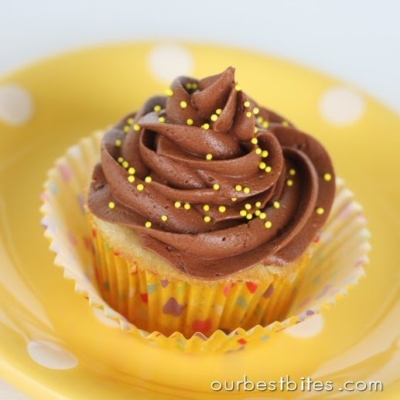
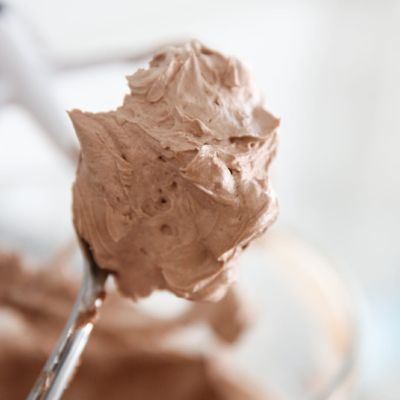
- Looking for Chocolate? This Chocolate Frosting isn’t exactly the same, but very similar!
Frequently Asked Questions
Yes. Brown sugar gives this frosting a deeper, almost caramelly flavor. Just be sure you’re using fine brown sugar (some brands like the organic one sold at Costco have quite large grains) and it may help to sift it first. When creaming with the butter, give it some extra time and make sure the sugar has dissolved well before adding the flour mixture to ensure a smooth texture.
This frosting is best flavored with extracts or flavoring oils. If you are looking for similar flour-based frosting, try this Chocolate Frosting.
Yes. If making just a couple of hours before use, cover tightly and store at room temperature (if your kitchen isn’t too warm) until ready to use. You may need to rewhip it before use.
If making a day or two in advance, cover tightly and store in the refrigerator. Before use, bring to room temperature and rewhip briefly to restore texture.
Yes, add gel or paste food coloring (not liquid) when you add the flour mixture.
Perfect Cupcake Frosting and Filling
Ingredients
- 3 tablespoons all-purpose flour
- ½ cup milk whole milk is best, but I’ve used non-fat when it’s all I have and it’s actually fine
- ½ cup real butter slightly softened (I prefer salted, but you can use also unsalted and add salt to taste)
- ½ cup granulated sugar
- 1 teaspoon vanilla extract or other flavor if you wish
Instructions
- Whisk together the flour and the milk (you could also run it through the blender first). Heat in a small sauce pan on medium heat.
- Whisk continuously until it starts to thicken. Let it cook, while stirring with a rubber spatula, until you can start to see the bottom of the pan. Continue to cook until mixture has the consistency of thick pudding or paste.
- Put mixture in the fridge and let it cool completely; it's fine if it stays in there long enough to get chilly, you just don't want it warm at all. As it's cooling, feel free to stir it occasionally to speed up the process and keep it from forming a crust on top. You can also do this quickly in the freezer, just keep an eye on it so it doesn't freeze.
- Using the whisk attachment on an electric stand mixer, beat the butter and the sugar for a minute or two until well combined and fluffy. While beating, add in the thickened milk mixture, any food coloring, and the flavor extracts. Beat to combine and then scrape down the sides. Mixture will separate and look messy, keep beating! Continue beating until mixture comes together and is light and fluffy, about 7-8 minutes, but time varies. Take a sample of frosting between your fingers; frosting is done when light and fluffy and sugar granules are dissolved.
Notes
- Store finished frosting or frosted desserts, covered tightly, in the refrigerator. Allow to come to temperature for 20-30 minutes before serving.
- If using frosting within a few hours of making the frosting or within a few hours of frosting cakes or cupcakes, simply cover and store at room temperature until time to serve.
- This frosting can be soft or even melt if it gets too warm. If needed, pop the whole mixing bowl in the fridge for 15 minutes and rewhip to help it hold its shape.
- Don’t leave frosted desserts sitting in the sun or in a warm environment for too long with this frosting or it may soften/melt!
- Use real butter, and a good name-brand. Cheap butter does weird things.
- If you beat for the 6-8 minutes and the mixture still looks strange, beat longer and at a higher speed if you can. It should come together, but it takes a little patience!
- I personally think this frosting is best eaten fresh. You can store for a few hours at room temperature, or try storing in the fridge overnight, letting it come to room temperature on its own, and then re-beating to fluff. If you want to frost cupcakes or a cake the day before, refrigerate and just let come to room temp after.
- Add extracts to your hearts content; lemon and almond are both wonderful! Food coloring is also okay.
- The white sugar can be exchanged for brown. Try 1/2 white 1/2 brown for a warm caramel flavor.
- Do not try to make other substitutions or additions. Sour cream, fruit purees etc. can do disastrous things. Some people have had amazing success, just experiment at your own risk.
- If trying to decide whether or not to double it- double it. Chances are you’ll want more. It’s a rather small batch, but on purpose.
- 1 batch will not look like much, but it can spread on (just with a knife, a normal amount) 24 cupcakes. If you want to pipe it thick, definitely double it.
- Looking for Chocolate? This Chocolate Frosting isn’t exactly the same, but very similar!








Questions & Reviews
Just tried this today…
I realize after reading some comments that I *forgot* to add the lemon flavor I was going to add (and didn't use vanilla or almond extract), so that would have helped somewhat. But my main concern is this: I can taste the flour. I don't like my frosting to taste like flour!
I used medium heat and whisked constantly while it was cooking. It seemed that the window of time when it the pan bottom showed was very small, and then it started to thicken a lot more, so I whipped it off the stove. The comment about it looking like wallpaper paste was right on. It got gummy as it cooled. Could it have not been cooked enough? I assumed it would end up brick-like if I cooked it any more. LOL
I went ahead and used the frosting, because I didn't want to make a new batch (x3)…but now I'm wishing I hadn't used it. It just doesn't taste right. 🙁
Lotte–I was trying to get here before Sara, haha! 🙂 I've tried it under fondant a few times and I think it's too soft; the fondant tends to slide off. I've heard that some people have replaced with butter with shortening JUST for using under the fondant (not for actually frosting cupcakes) and that it works better because shortening has a higher melting point than butter.
Lotte- sorry about the measurement confusion! I should write those out to be more clear. I think the frosting would work just fine underneath fondant. Have fun with it!
Hi
I'm new in the frosting area, so my question is perhaps stupid.
Can I use this frosting underneath fondant ?
Tryed the frosting recipe the other day and with a few ajustments it became quite good. Im from denmark and we don't use Cup's and i didn't know what a "T" was, but in the end it all turned out fine.
Thanks
Lotte
moni- I know what you're talking about. If you're having that problem when adding flavorings then it's just the issue of an added element that's causing it to change. If it's just with the normal frosting, then I honestly don't know how to fix it. I wish I had a better answer, but I don't know- sorry!
Hi Sara or Kate,
I made this frosting regularly, but sometimes have issues that I have not been able to figure out.
I've had success with adding syrupy flavorings (e.g. caramel, fruit syrups or melted & cooled jam, etc). When using this sort of flavoring, I make a white sauce with less milk; then I stir in the syrup – this way the total liquid is about the same and the thickness of the sauce is also similar to normal.
My problem is: occassionally, the frosting looks kind of un-emulsified, and some of the liquid kind of oozes (for example, if the frosting is colored, there'll be colored liquid in the un-emulsified air-holes.
This also sometimes occurs in my meringue buttercreams – the liquid actually accumulates at the bottom of the mixing bowl.
I'm not sure if it should be corrected by adding MORE butter, or adding more liquid/white sauce (i.e. increasing or reducing the fat content)
Have you had any such experiences?
Thanks for maintaining such an imformative site and for replying to all your readers – we really appreciate it!
Happy new year to you and your families!
Michelle, it's fantastic as a filling! And yes, it's fine to leave it in for a few days.
I have been looking for this all my life 🙂 Question – how about using as a cupcake filling, okay to leave in for a few days or will it do weird things?
Oh…this frosting is DELICIOUS!! I love the texture, it's super light and fluffy and surprisingly not grainy like recipes I've tried using powdered sugar. From now on this will be my "go-to" recipe for frosting.
–During the cooking of the flour and milk I did let it get too hot too quickly and it ended up super thick…I decided to try it anyhow and it still turned out AMAZING!!
–I wanted to experiment with how long they last at room temperature and mines kept for 3 days with no problems, it still tasted yummy and light. (We live in Hawaii so it's always pretty warm & I didn't have any problems, I just stored it in a tupperware that seals well)
–We also tried storing it in the fridge but I wouldn't recommend it, ours didn't separate but the frosting got hard, it may have softened if I let them "thaw" but I prefer to just leave them at room temp.
Thank you all so much, this blog is just too dangerous for me! Everything looks so yummy!!
Eggnog?! I would have never guessed that- you may have changed my life! lol Can't wait to try that one.