I posted this tutorial a few years ago and it has become somewhat of a tradition to bring it back every year! One of our family Easter traditions is dying eggs with pieces of silk. I saw a cute lady show Martha how to do it a few years ago and I ran upstairs right then to steal a tie! It’s way cooler than those cups of neon liquid that end up all over your clothes, your furniture and your hands plus it gives you an excuse to rid a man’s closet of ugly ties.
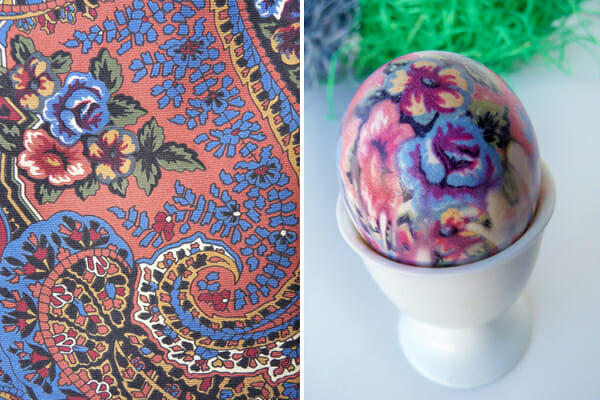
Supplies Needed
This is just a preview of supplies and method, keep scrolling for full printable instructions.
- Eggs – These eggs are purely decorative, as you’re using clothing to dye them and will be boiling them for a long time. I have not tried using decorative egg options so I don’t know how those would work out. I just use regular raw, white eggs! See this Blown Egg Ornaments post for details on using blown eggs that you can bring out year after year.
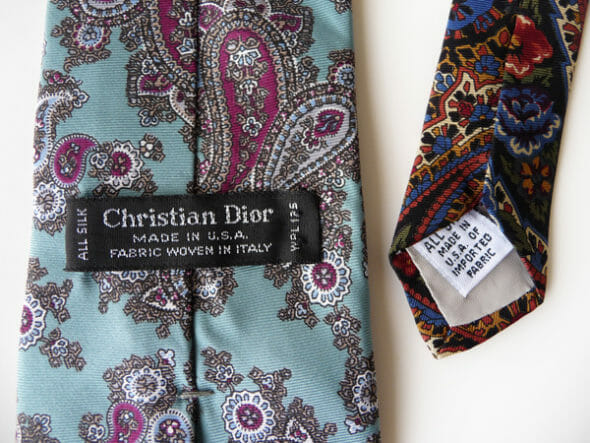
- Silk ties – You need 100% silk for this to work. Make sure to check the labels to make sure you’re not buying polyester, which can look similar. I grab old ties at the thrift store where they’re usually pretty cheap (that Christian Dior tie pictured below was 50 cents). And remember: when it comes to ties, you may not want ugly ones on your man, but ugly ties do make pretty eggs! You could also use silk from an old blouse, a scarf, or whatever. So if you’re rummaging through a thrift store, check out some other areas as well.
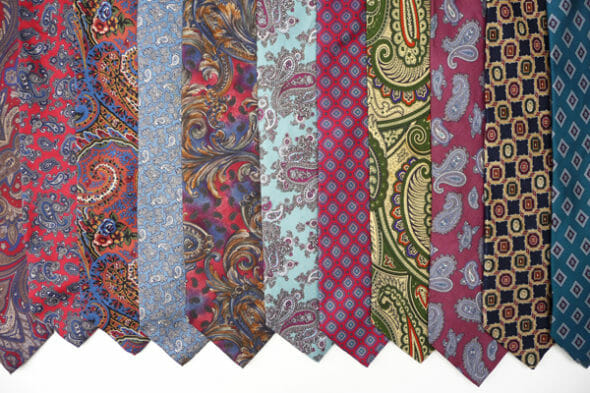
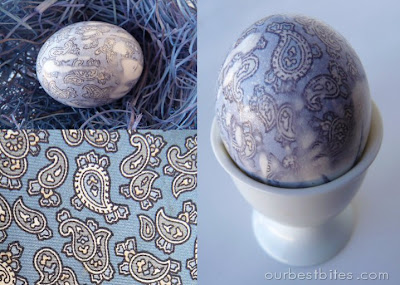
I try to find an assortment of colors and patterns. Usually dark blues, purples, and reds work the best, but it’s fun to experiment with all kinds of things. The interesting thing is that you never know how much of the color and pattern will transfer to the eggs. Sometimes ties I think will be awesome really disappoint, and ones I didn’t think much of make the most beautiful eggs.
Usually it will tell you if it’s 100% silk right on the main label of the tie, but a lot of them don’t, and if that’s the case, check that little tiny end, it’s usually hiding there. - Light colored fabric and twine/twist ties- You’ll need these to help tie the silk in place and prevent dye from spreading from egg to egg. Any light colored, thin fabric will work, like an old tea towel or pillowcase. If you’re already picking up ties from the thrift store, look around for something that will work here!
- Vinegar – Adding vinegar to the boiling water will help set the dye on the egg shell.
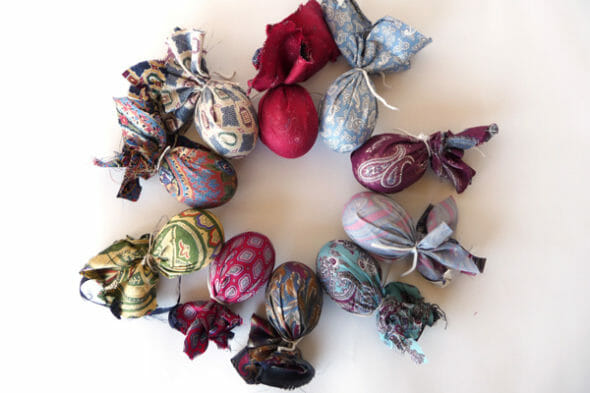
How to Make Silk Dyed Eggs
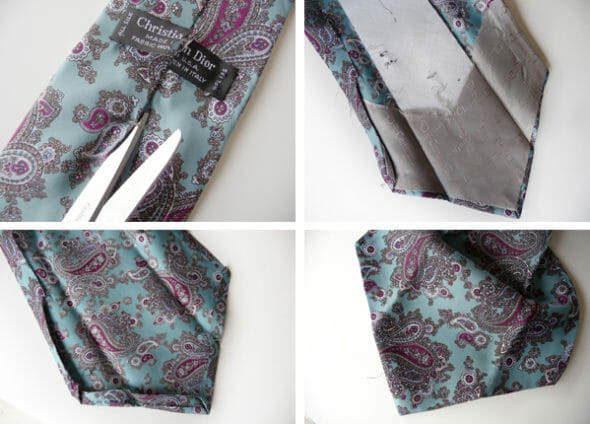
- First you’ll want to deconstruct your ties. Snip the seams and remove the lining so you’re just left with the still.
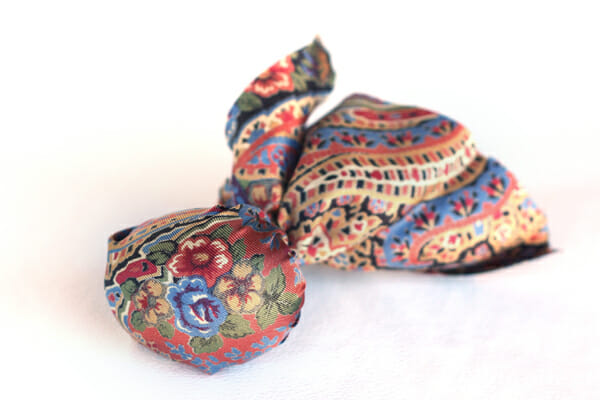
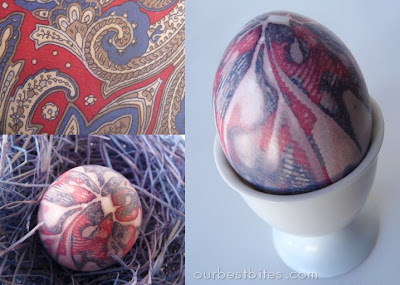
- Next cut a piece large enough to cover an egg. Wrap the egg with the right side of the fabric making contact with the egg. The right side is the printed side, or the side that would be on the outside of the tie. You want to try to wrap the fabric as tight as you can without breaking the egg of course. The more direct contact the silk has with the egg shell the clearer the imprint of the pattern. Where there are folds in the fabric you’ll get kind of a swirly water color effect. I love those parts- it adds to the charm. Once wrapped, tie with a piece of string or a twisty tie. (Do yourself a favor and go with the twisty tie!)
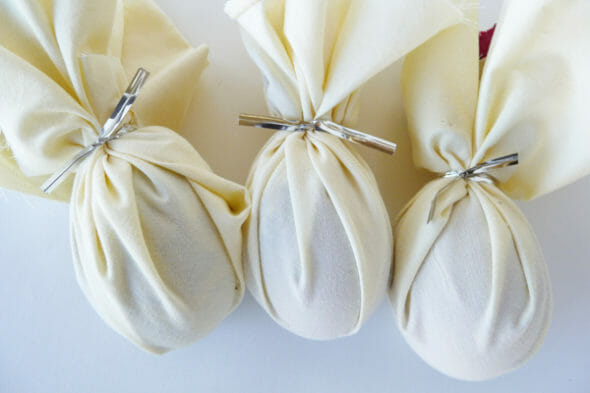
- After the eggs are wrapped in silk, you’re going to wrap them again with a light colored light weight piece of fabric. An old pillowcase, sheet, or thin dish cloth is perfect.
- Put all those little guys in a pot and cover them with water. Add 1/4 cup vinegar and bring it to a boil. After about 20 minutes you can remove the eggs and set them in a colander or on a towel to dry and cool. Once they’re cool enough to handle you can remove the fabric.
Storing and Other Tips
- I don’t recommend eating these eggs. However, they should be stored in the fridge if not actively out as a decoration for something.
- If you want to give your eggs a little shine, just rub a small amount of vegetable oil onto them when they’re finished.
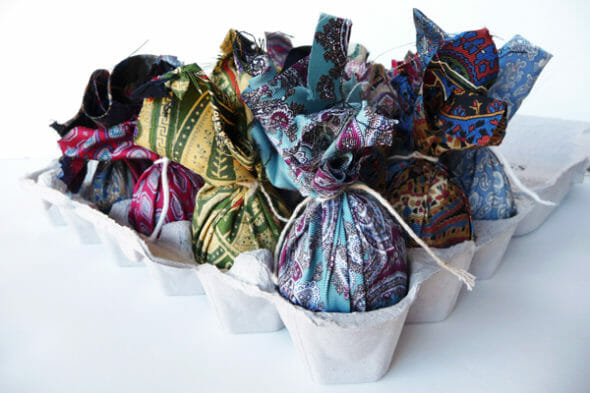
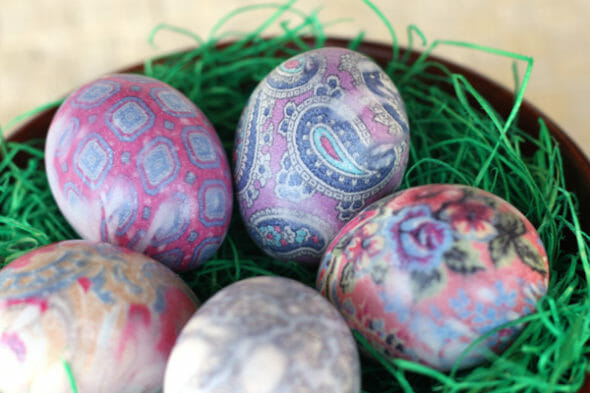
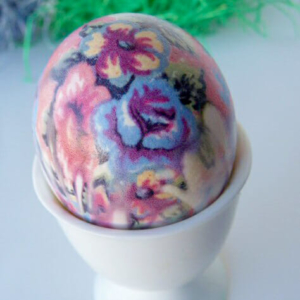
- You’ll notice I tied the eggs in the above photo with the tie on the top of the long side of the egg. If you do this, the opposite end of the egg will have the best pattern. If you are going to be sitting the eggs upright in an egg cup, this is the best way to wrap them.
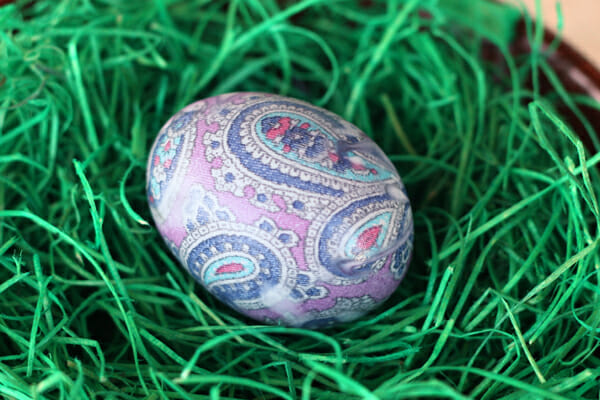
- However, if you want the best part of the design on the wide side of the egg, you’ll want to wrap them horizontally, like this:
Final Products
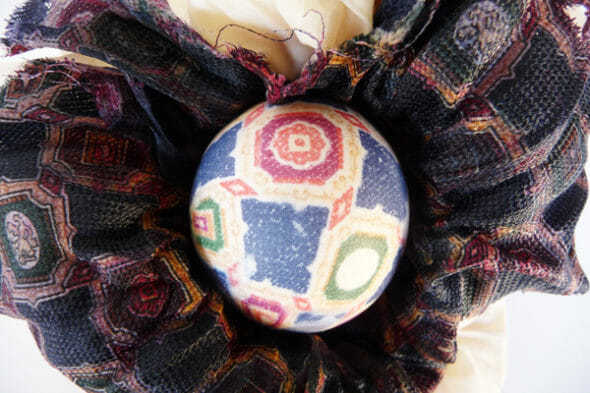
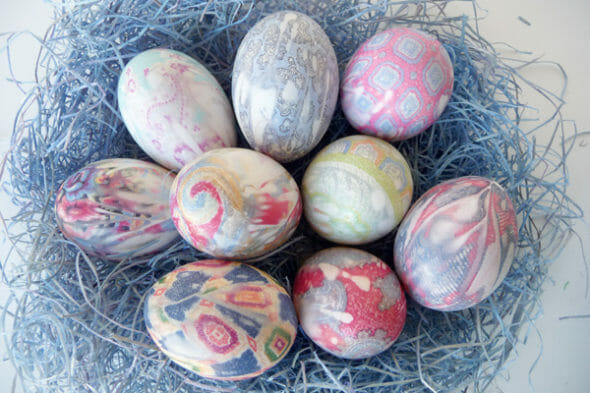
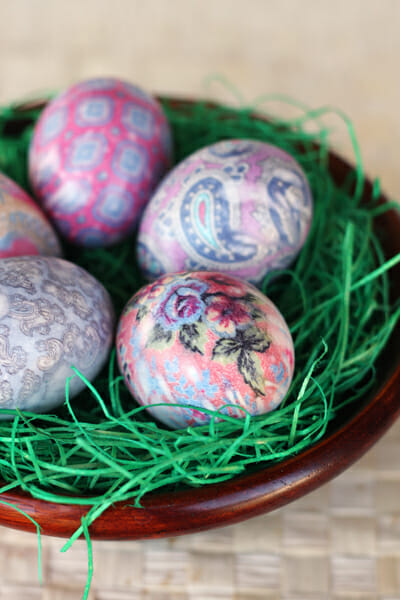
My favorite part is unwrapping the eggs to see how they turned out!
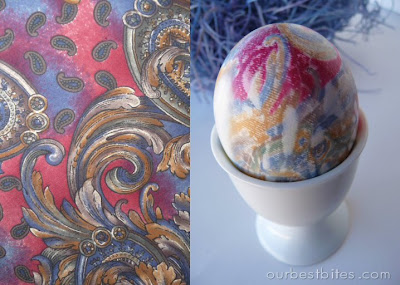
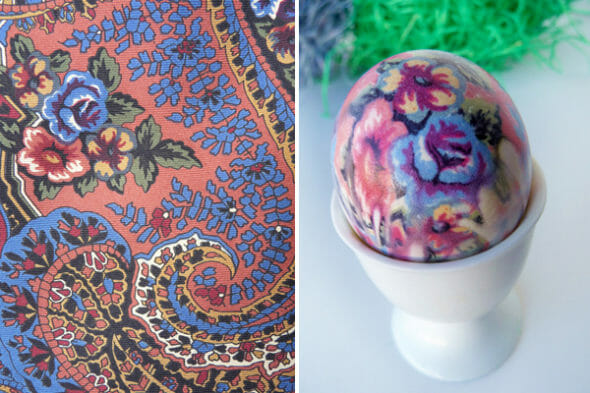
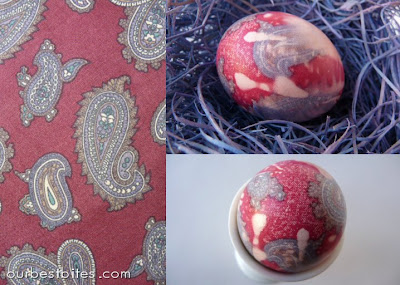
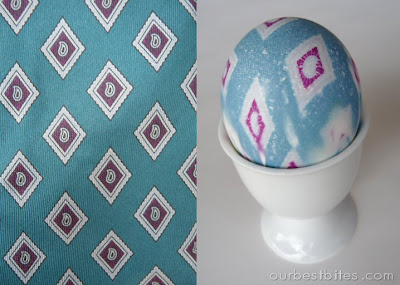
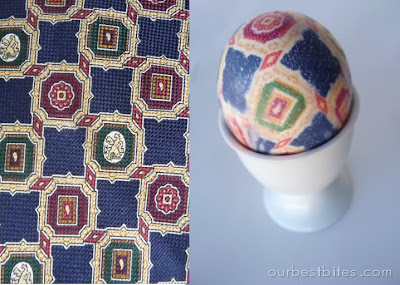
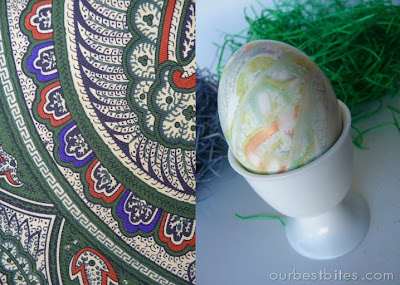
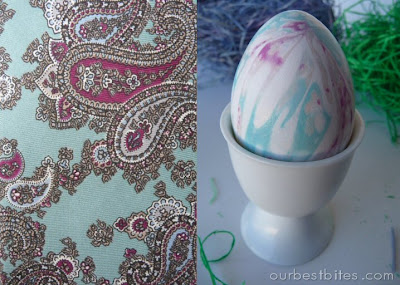
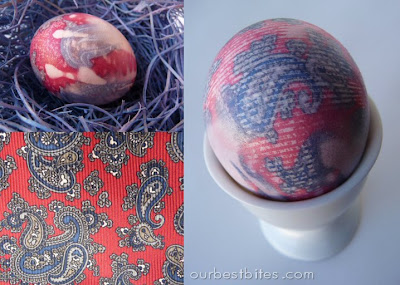
Frequently Asked Questions
These eggs are boiled for a long time and you’re using unknown fabric dyes from the silk to color them, so I don’t recommend eating these.
Yes! Click here for a tutorial on how to blow out eggs, and also turn them into hanging ornaments. Instructions on how to do silk-dyed eggs with blown out eggs are found in that post.
Honestly, I did not know there was such a thing until everyone left comments asking about it on this post! Readers who have tried this have reported it does not work very well with wooden eggs.
I think it does help keep the colors in there next to the egg and therefore make them more vibrant, but if you want to try skipping that step- chances are it will still work just fine.
Nope! Anything that’s 100% silk. A tie, a scarf, a blouse, etc.
You can, but the colors will fade a little more each time.

Silk Dyed Easter Eggs
Ingredients
- raw white eggs
- 100% silk fabric from ties, blouses, etc.
- twine or twist ties to secure fabric around eggs
- thin, light colored fabric
- ¼ cup vinegar
- water
Instructions
- Cut pieces of 100% silk large enough to cover an egg. Wrap as smoothy and tightly around egg as possible, with right side of fabric facing in, and secure with a twist-tie or piece of string. Repeat process, but wrap with a plain piece of lightweight fabric, like an old white pillowcase or sheet.
- Place eggs in a large stock pot and cover with water at least 2 inches above eggs. Add ¼ cup white vinegar. Bring pan to a boil and reduce to simmer. Simmer for 20 minutes and then use a pair of tongs to remove eggs and lay them (still wrapped) on layers of paper towels or an old dish towel.
- Let cool to room temperature and then remove the fabric wrappings. Store in the fridge until ready to display. If desired, rub with a small amount of vegetable oil for shine.
Notes
- These eggs are boiled for a long time in unknown fabric dyes. I do not recommend trying to eat them.
- See this Blown Egg Ornament post for info on using blow out eggs you can bring out year after year.
- The best pattern and color transfer will be opposite of wherever you tied your egg. If you intend to display upright, tie at the opposite long end of the egg. If you intend to lay them in a bowl or nest, tie the egg on the opposite side you want displayed.









Questions & Reviews
I found lots of ties today but most are boring! I found enough to make it happen. I will be on the look out from now on!
Well, it’s about time that I write to thank you for this craft and the genius snot sucker method for blowing eggs. This has become an Easter tradition and I LOVE them and opening the little packages to see what happened! This year I went next level and filled the eggs with a chocolate and Nutella mixture. Mailed them to the college-aged kids that I used to do this craft with. Truly thank you for all of the special Easter memories associated with your tie-dyed eggs!!!
I have some beautiful eggs that I made with the silk tie method that I made about 10 years ago. I did not blow out the eggs. After Easter I put them in my basement in an egg carton and turned them at first maybe every few days. After some time, I would turn them less often and less often. They never smelled bad and now after about 10 years, they all rattle. The yolk and whites hardened into a little ball that rattles if I gently shake them. They are still beautiful and probably would last centuries. I make new ones every year to add to my collection or to give to people – neat hobby.
I’ve heard of others doing this- so cool!
Will this work on Egg Gourds? I grew some Egg Gourds for the last two years and was wondering if I could Dye them this way with silk. I’ve done this on real egg and love it.
I have no idea!
I’m so glad to see in your Q and A that you recommend not eating them. Every Easter I’m posting on sites and on FB about not eating these eggs. As a fabric dyer I also would stress to add that they not use that pan again for cooking. I use the ties to dye silk scarves and the water changes from clear to colored by the dye. I have an old pan just for dyeing these scarves. I also found that silk skirts don’t dye very well. I believe that’s due to being washed, when most ties aren’t washed.
I’ve done this each year since the story came out and my best results when I rolled the egg moist with water in silk and twist tied each end and used a white sock to hold them in for the boil and make sure it has cooled completely before taking out to assure the best color transfers.
great tips!
Thank you so much. I direct people to you page when they ask where I heard about doing my eggs this way. I have learned a couple things I would add for the people who want the perfect eggs. I use jumbo eggs for me easter basket and I have a bowl of tap water on the table when wrapping the eggs. After I place my egg on the spot I want I do the tie and egg into the water, it helps form the fabric to the egg and allows for better coverage and placement. Oh… one more thing.. I use cheesecloth for my outer fabric. I think I get better color.
Mine didn’t work nearly as well. Followed the instructions to a T but mine are all very pale. Not much transferred. Some are still white. It was fun nonetheless.
Thank you for a great explanation. I was looking online for a similar idea and really appreciate it
Custom Embroidery Digitizing
I liked this ester special dying eggs. It is beautiful. i want to try it in the next year. the idea is great. I loved it.