Kate and I are definitely lovers of sauces and spreads. We make a mean BBQ Sauce, delectably sweet caramel, and chocolate sauces, fantastically flavorful green chili sauce and flavored butters and sandwich spreads galore. And we get email after email after email saying, “Hey, I love this! I want 48 bottles on my shelf all at once! Can I can it?” And our answer is always the same: sorry, no dice. Canning is a science, and it’s really important that you only can recipes that are formulated and tested for safe home canning. I’ve had loads of people emailing in that they’re loving our Fresh Tomato Basil Sauce from our latest cook book. It’s one of my summer favorites, too! But alas, it wasn’t meant for canning (freezing however is A-Okay.) So for those of you who like me, have ripening red tomatoes in the garden, and want to preserve every last drop, I bring you this simple sauce, made for home canning!
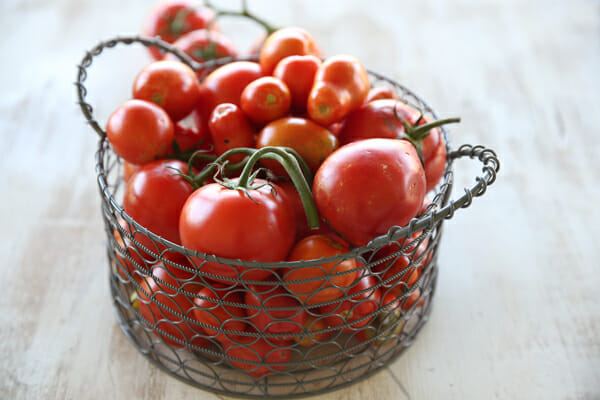
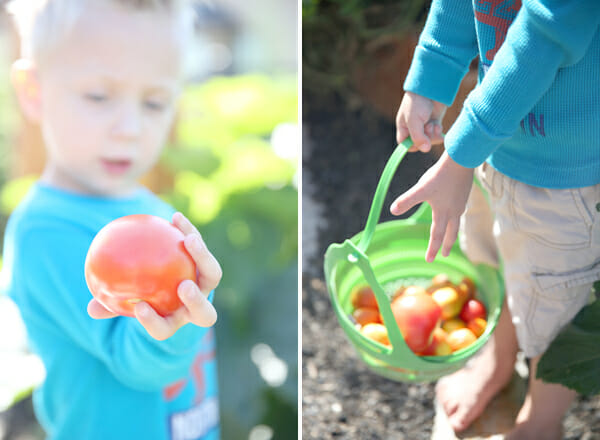
Now, I feel like I need to warn you if you’ve never canned tomato sauces before. The first time I ever tried, it literally took me ALL day. I labored, I toiled, I peeled, I chopped, and I simmered. And when I was done I had like, 2 jars of sauce and I wanted to cry. How those 427 pounds (slight exaggeration) of tomatoes boiled down to 2 measly jars was mind boggling to me. That being said, I’ve really learned how to streamline the process (see my note later in this post about prepping and freezing tomatoes) so it’s not a huge process for me. This recipe still only produces 6 pints (pints are fairly small jars) so I usually do it once or twice during the summer. But for me it’s totally worth it when I crack open one of those lids and taste fresh summer tomatoes. I save these sauces for special things like homemade pasta, fresh breadsticks, or a yummy simmered chicken dish. As opposed to like, dumping it over spaghetti noodles for my kids on a hurried weeknight. I want them to appreciate that darn sauce! They always think it’s cool when I remind them that they helped pick those very tomatoes.
Ingredients and Equipment Needed
- Water Bath Canner
- Ripe tomatoes
- Brown sugar
- Kosher salt and black pepper
- Balsamic vinegar
- Fresh basil leaves
- Fresh assorted herbs – such as oregano, thyme, parsley
- Lemon juice
- Roasted garlic
How to Make and Can Tomato Basil Simmer Sauce
Step 1: Peel Your Tomatoes
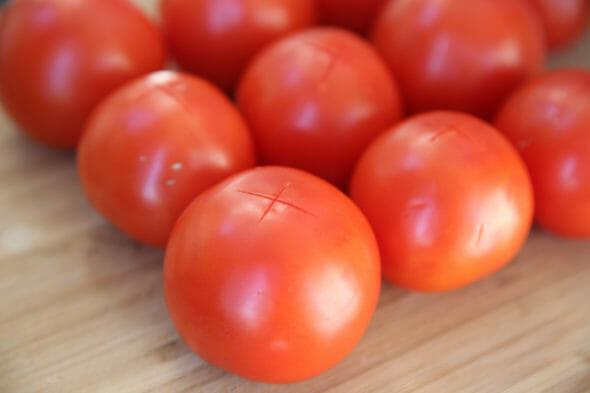
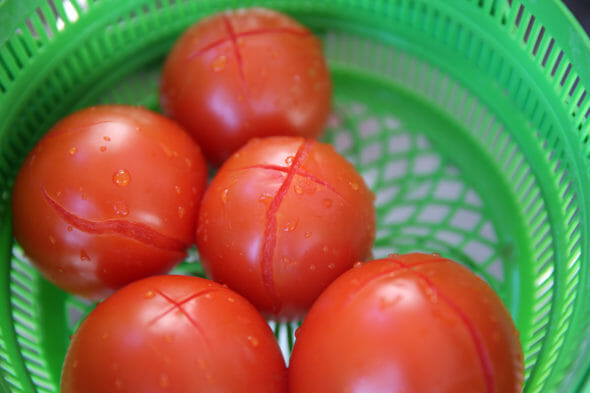
- We’ll need to start by peeling the tomatoes. When I can salsa, I never peel my tomatoes, but for something like a delicate sauce, I think it’s always better to peel. This is super easy, and just like we do peaches. Start by making a small “X” incision on the bottom of each tomato, just barely piercing through the skin.
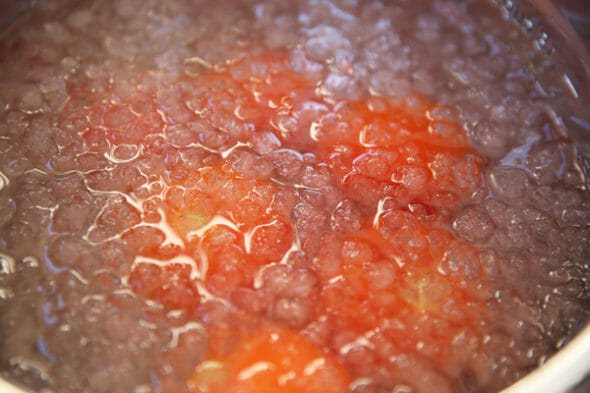
- Place tomatoes in a large pot of boiling water. It just takes about 30-60 seconds; I watch for the skin to just start splitting like in this picture below. If you wait too long, the delicate tomatoes turn to mush under that skin, so remove them when the just start to crack, as seen in the pictures below.
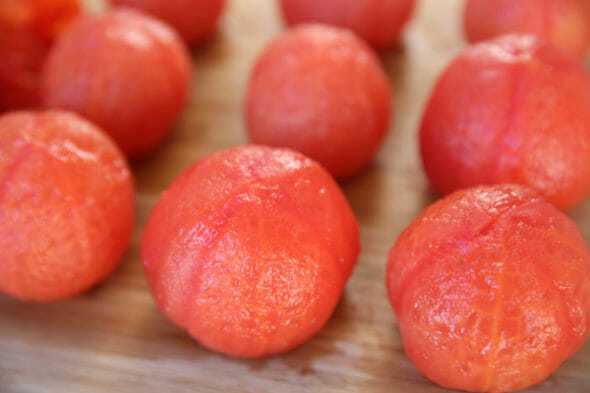
- Place tomatoes in a large pot of boiling water. It just takes about 30-60 seconds; I watch for the skin to just start splitting like in this picture below. If you wait too long, the delicate tomatoes turn to mush under that skin, so remove them when the just start to crack and then plunge them immediately in a bow of ice water. The skin should peel right off rather easily. Leaving you soft, juicy skinless tomatoes. Now, you might be noticing how beautifully perfect these tomatoes are. I’m using a few gorgeous, round ones for this tutorial because I knew they’d be the best for demonstrating the technique, but be aware most smaller or home-grown tomatoes will look pretty sad at this stage!
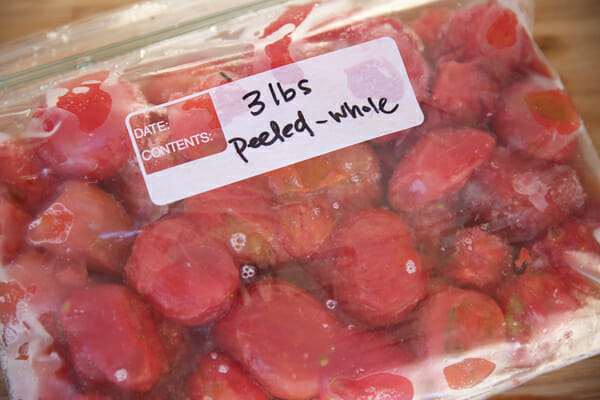
- Since I don’t always have 12 pounds of tomatoes sitting around at once, and the peeling process can be tedious, what I often do is peel small batches at a time, just whenever I have a good picking, and pop them in the freezer. I always weigh them first and label the bag so as soon as I have enough, I can use them in a recipe like this. I do the same thing for my salsa, just with diced tomatoes. It makes the whole canning process so much more manageable.
Step 2: Make Your Sauce
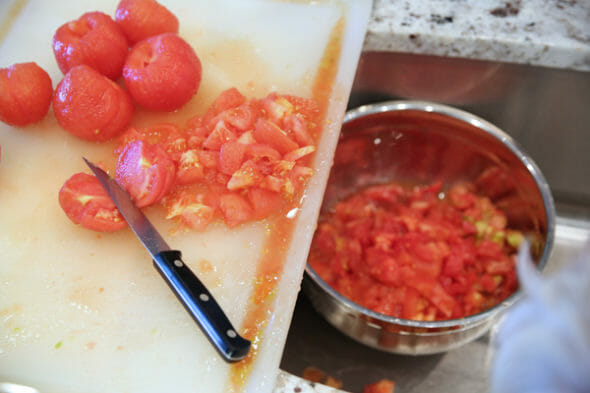
- Once your tomatoes are peeled, take a knife and gently remove the core if needed (sometimes you don’t even need to on small tomatoes.) I use a set-up with a large cutting board set over my sink. I very roughly chop the tomatoes and slide them into the bowl below, and any garbage just goes into the sink and down the drain. Don’t stress about chopping too well, the tomatoes simmer for so long that they’ll get totally broken up on their own.
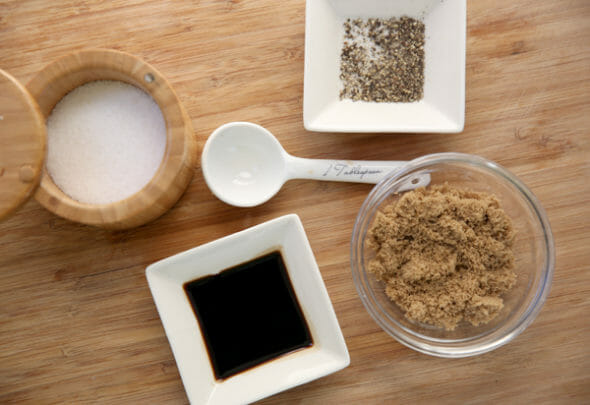
- Once they’re all in the pot, add some sugar, salt, pepper, and balsamic vinegar. All of those ingredients really enhance the natural flavors in the tomatoes.
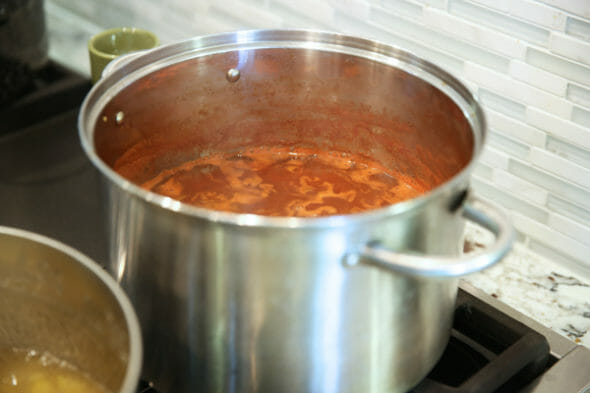
- Bring that mixture to a boil on the stove and then reduce it to a steady simmer. You’ll notice it’s very watery, and that’s okay. This sauce will simmer for about an hour and a half, uncovered, so the extra moisture evaporates and the flavors are concentrated. The original recipe suggests simmering for 70-80 minutes, and I’d say I do closer to 90. My mixture started about 2 inches from the top of that pot when I started, so you can see how far down it’s moved.
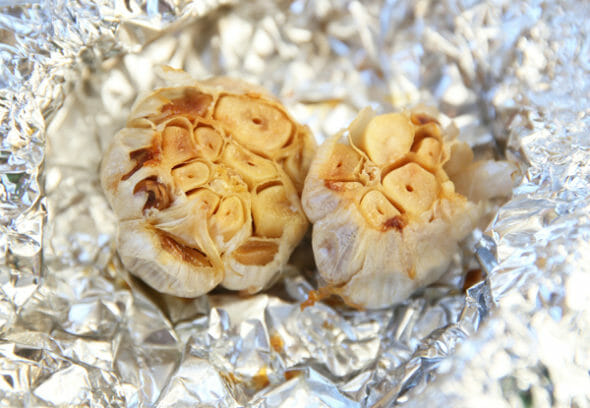
- When it’s done simmering, we’ll add in some roasted garlic. You can have this roasting while your sauce simmers and it will have plenty of time to cook and cool off a bit. Also your house will smell like heaven. (For a tutorial on how to roast garlic, click here.)
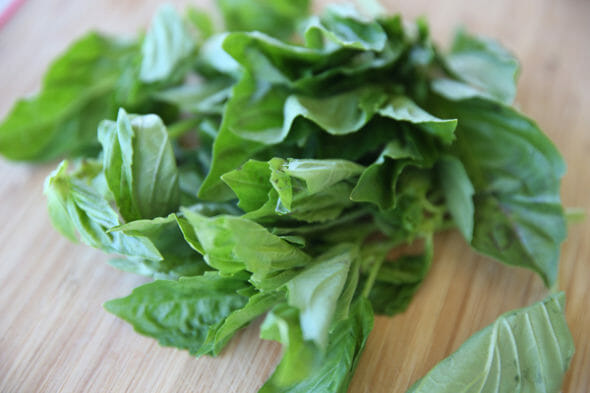
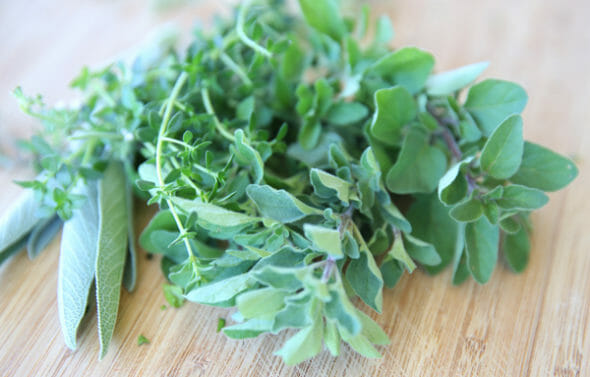
- Next in goes a bunch of fresh basil, and then a cup of any assorted herbs you like. You could just add more basil if you want; I added stuff I have in my garden right now, lots of oregano, a little thyme and sage and some rosemary.
Step 3: Can Your Sauce
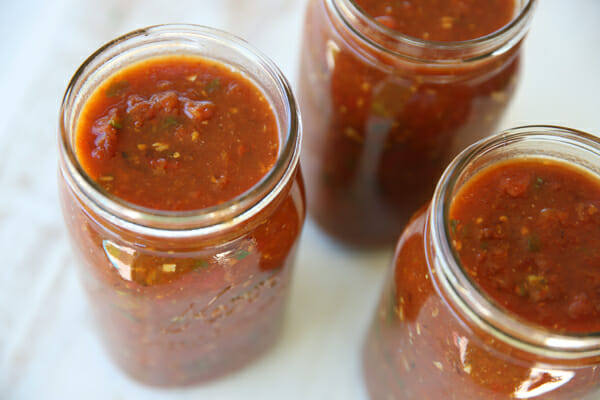
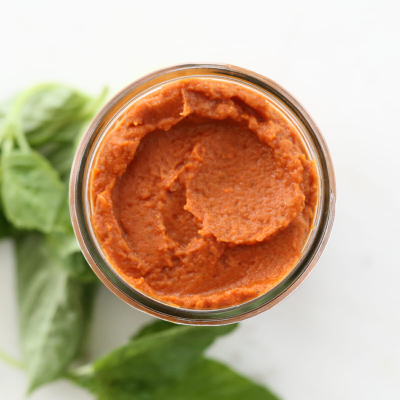
- Ladle the sauce into hot canning jars that have a little lemon juice in them (necessary for acidity purposes for safe canning- don’t skip it.) See how dark and gorgeous that is?
- After placing lids and rings on the jars, you just process them in a water bath canner. Don’t let a canning term scare you- all you’re doing is placing your jars in a large pot of simmering water! So easy! You don’t even have to have a big special canning pot, it just needs to be able to have the jars covered by an inch or two of water, and fit some sort of rack on the bottom of it for good circulation (a round cake cooking rack works well). Then you’re all set to enjoy your garden-in-a-jar during some cold winter months.
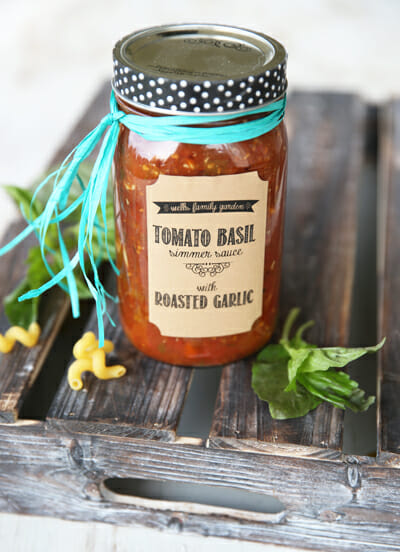
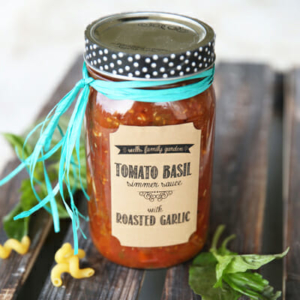
Doesn’t this jar look so cute all dressed up for gifting? Well it’s just a clever ruse. I give away jams and jellies without a second thought, but I hoard every last jar of this sauce for myself!
Storing and Other Tips
- Canned Tomato Basil Simmer Sauce should be used within one year of canning for best results.
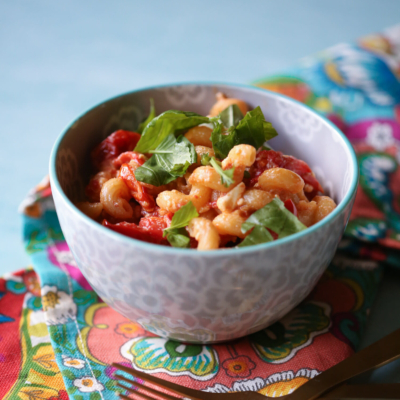
- Try this sauce on pasta, or used to simmer chicken or bake eggs. I’ve even added chicken broth and crumbled Italian sausage and veggies for an amazing tomato soup.
- This recipe has been written specifically for, and tested, for safe home canning. To ensure food safety, do not stray from the recipe. If you’d like to alter the ingredients and or/ratios, feel free to freeze the sauce instead of canning it. You can also adjust the flavor after opening sealed jars to use them – try sautéing Italian sausage and onions and adding the sauce to simmer, or adding fresh grated Parmesan cheese.
Frequently Asked Questions
If you’re looking for pure convenience, store-bought sauce may be your best bet. Canning does take work, but it’s full of flavor you just won’t find in cheap bottled sauce. It’s a great way to utilize garden tomatoes, it’s affordable, and you’ll always know exactly what’s in it! If you prefer a recipe you don’t have to can, try this Roasted Garden Tomato Sauce.
Tomato Basil Simmer Sauce with Roasted Garlic
Equipment
- 1 water bath canner
Ingredients
- 12 lbs ripe tomatoes about 25 good size plum tomatoes, peeled
- 3 tablespoons brown sugar packed
- 2 tablespoons kosher salt or 4 teaspoons table salt
- 1 tablespoon balsamic vinegar
- 1 teaspoon freshly ground black pepper
- 2 cups basil leaves fresh, lightly packed, chopped
- 1 cup fresh herbs, assorted, lightly packed such as oregano, thyme, parsley
- 6 tablespoons lemon juice
- 3 tablespoons garlic roasted, minced; about 2 heads of garlic
Instructions
- Cut peeled tomatoes into large chunks and place them in 7- to 8-quart nonreactive heavy pot (nonreactive means avoid aluminum. Go for stainless steel or enamel covered cast iron like Le Crueset).
- Add brown sugar, salt, vinegar, and black pepper to the tomato mixture. Bring to a boil and reduce heat to a steady simmer (it should be bubbling all over). Continue to simmer, uncovered, for 70 to 80 minutes (a little longer if necessary), stirring occasionally, until mixture is reduced to about 11 cups and is desired sauce consistency. Remove from heat; stir in herbs and garlic.
- Spoon 1 tablespoon lemon juice into each of six hot, clean pint canning jars (or do 2 tablespoons in each of 3 larger quart jars). Ladle sauce into jars with lemon juice, leaving 1/2-inch headspace. Wipe the jar rims; adjust lids. Process filled jars in a boiling-water canner for 35 minutes (start time when water returns to a full boil). Remove jars; cool on wire racks. Sauce is shelf stable for up to one year.
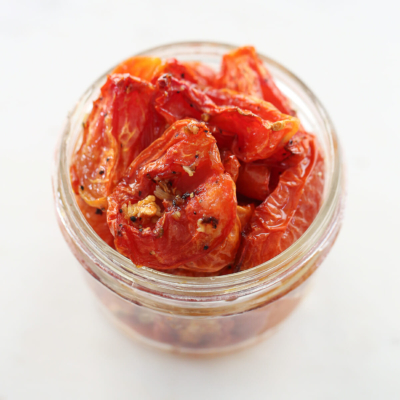
- Optional add-ins: Stir in 1 tablespoon crushed red pepper flakes with the herbs for a spicy sauce. Or for a double-tomato sauce, add in 1 cup snipped dried tomatoes (not oil packed) with the herbs.
Notes
- This recipe has been written specifically for, and tested, for safe home canning. To ensure food safety, do not stray from the recipe. If you’d like to alter the ingredients and or/ratios, feel free to freeze the sauce instead of canning it. You can also adjust the flavor after opening sealed jars to use them – try sautéing Italian sausage and onions and adding the sauce to simmer, or adding fresh grated Parmesan cheese.
- Nutritional information was calculated per pint.








Questions & Reviews
How long will the sauce last if frozen instead of canned?
i thought tomato sauce had to be pressure canned?
Tomatoes don’t have to be pressure canned unless non-acidic ingredients are added. Tomatoes are on the line between being acidic enough to can using only a waterbath and having to pressure can. The lemon juice in the recipe adds additional acidity (and it’s better to use store bought as store bought has a standard acidity whereas an individual lemon’s acidity level can vary).
For this recipe, even though the garlic and herbs are non-acidic, there is basalmic vinegar (acidic), sugar (natural preservative), salt (natural preservative), and lemon juice (acidic). These ingredients outweigh the non-acidic/non preservative nature of the herbs & garlic.
This looks great, but it should be noted that processing time should be added for altitude to ensure safe preserving. Check out Ball’s Altitude Chart here http://www.freshpreserving.com/guides/AltitudeCharts.pdf
Do you have a printable template for your label? I love it and love the idea of gifting the sauce.
You guys are awesome! Keep up the good cookin’
Thanks for a good canning recipe. Keep ’em coming!
Can you use honey in place of brown sugar? One of my kids is on a special diet and can’t have sugar.
Do the processing times differ if I use quarts instead of pints? Does elevation matter too? Am I over-complicating this? haha
This was amazing! So, so, good! You two are the greatest!
Thank you for posting this. I love the idea of freezing the tomatoes. Quick question on the basil and other herbs- do you measure before you chop or chop and then measure? Thanks.
Measure, then chop. When reading a recipe, you can always tell because it will be written one of these ways:
“2 cups lightly packed fresh basil leaves, chopped”
or
“2 cups chopped fresh basil leaves”
The same goes for things like nuts, or even melted butter. “2 tablespoons butter, melted” vs. “2 tablespoons melted butter” Make sense? Hope that helps!
Here’s a little trick for streamlining the process even more. If you wash and freeze the tomatoes WITHOUT peeling them, you can run some warm water over the frozen tomatoes before cooking and the skin will peel right off! It’s super fast and easy!!