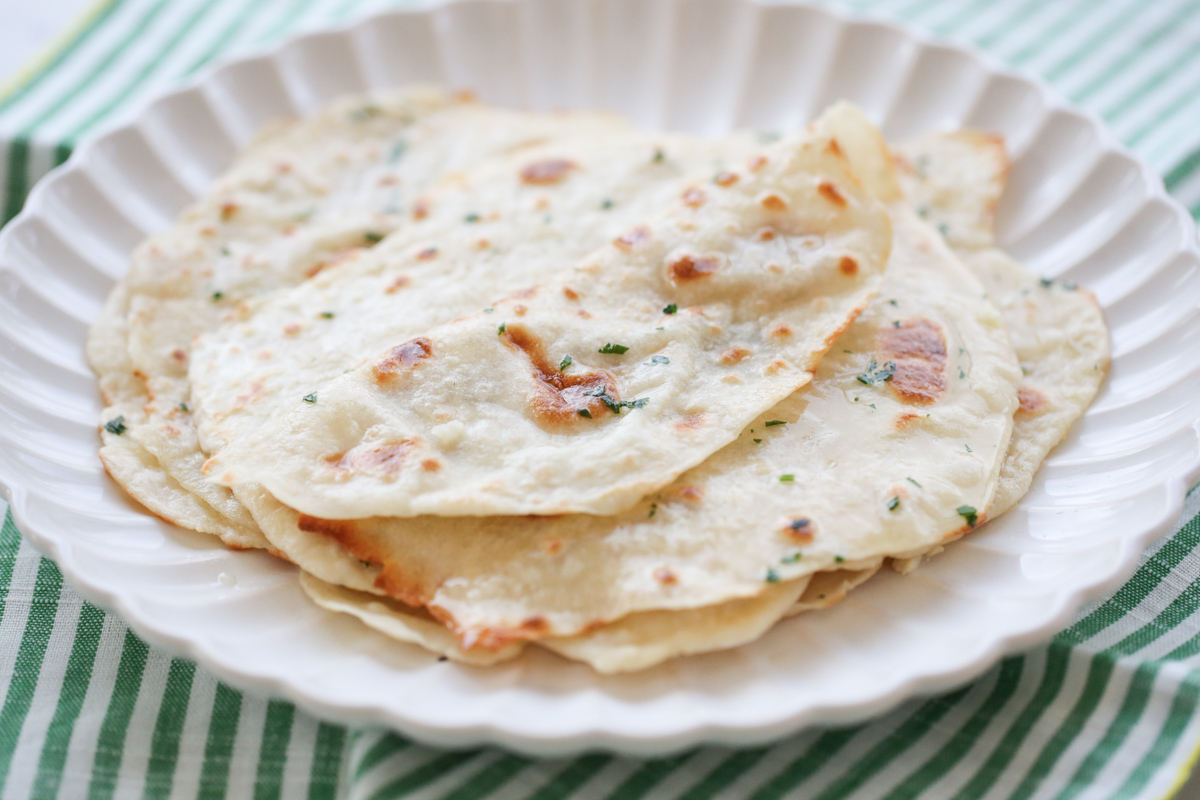
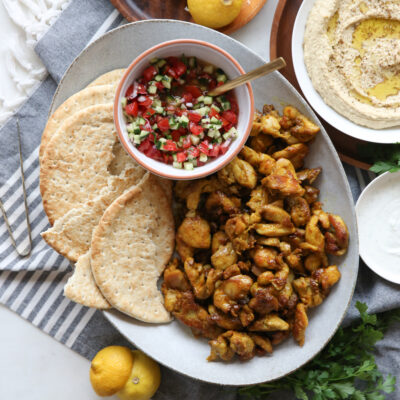
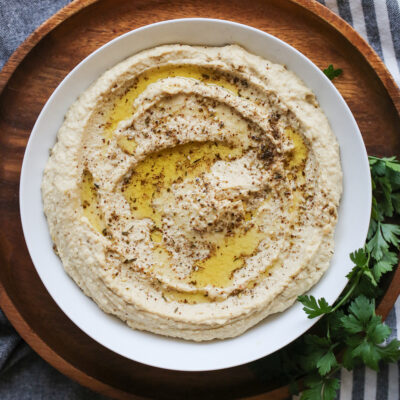
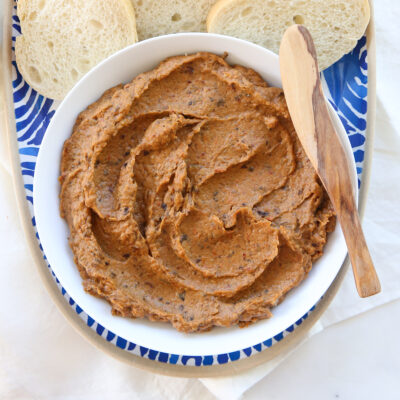
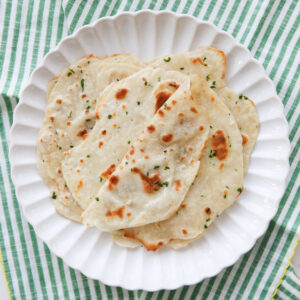
This yogurt flatbread requires just a handful of pantry staples, hand-mixed into a soft dough, rolled thin and cooked in a dry skillet. There’s no yeast, no rising, no oven. The result is super tender, flexible flatbread that works just as well for wraps as it does on it’s own, and it stays soft! I’ve included instructions on making ahead to rewarm, and even freezing! We love these with my Sheet Pan Shawarma, or used to scoop up fresh Hummus or Eggplant Dip. You can also use them in place of tortillas in a lot of recipes. Once you know how to use this magical dough, you’ll be making them all the time!
Ingredients Needed
This is just a preview of ingredients and method, keep scrolling for full printable recipe.
- Plain Greek Yogurt – Different yogurt brands vary in thickness and consistency. I usually buy Fage brand, 2% or 5% fat. It’s extremely thick. If you use a thinner consistency yogurt, you might need a little extra flour.
- Olive Oil – Just a couple teaspoons of oil keeps the flatbreads tender and improves texture.
- Baking Powder
- Salt – I prefer a fine sea salt that disperses evenly in the dough.
- Butter, Garlic, and Parsley – optional, but recommended for brushing on cooked flatbreads.
How to Make Easy Yogurt Flatbreads
Full printable recipe card below
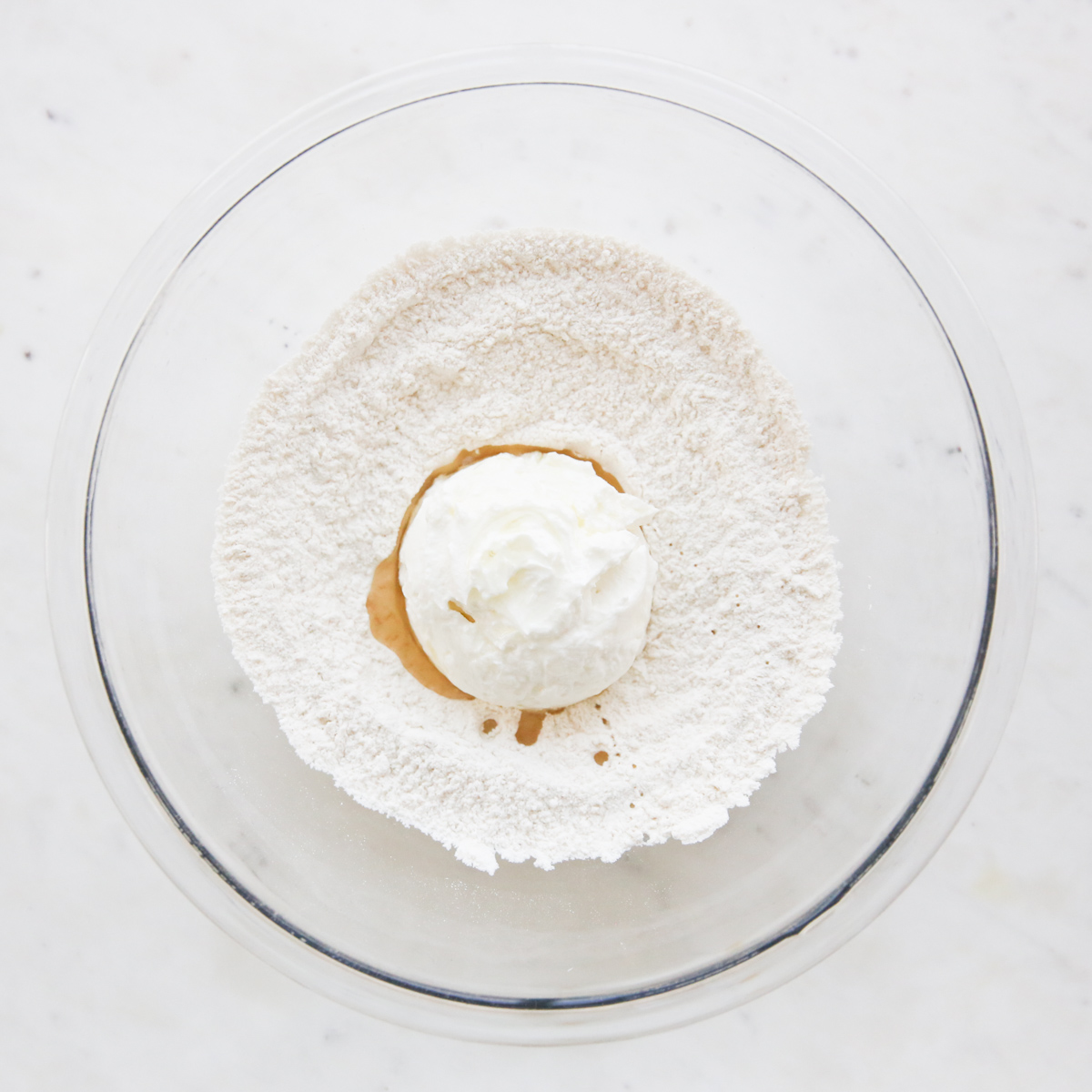
- Measure out your dry ingredients into a bowl: flour, salt, and baking powder.
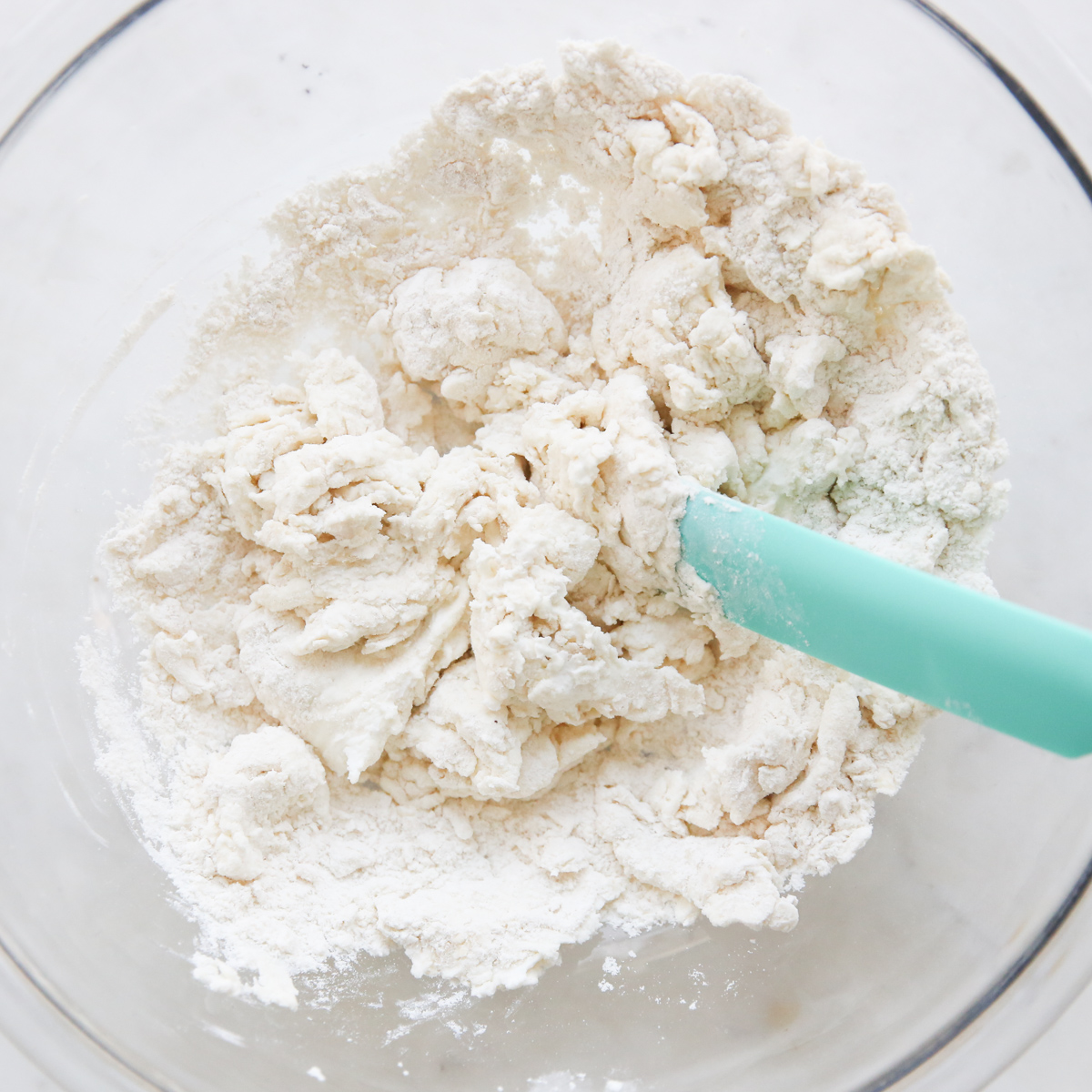
- Add Greek yogurt and olive oil and mix into a cohesive dough.
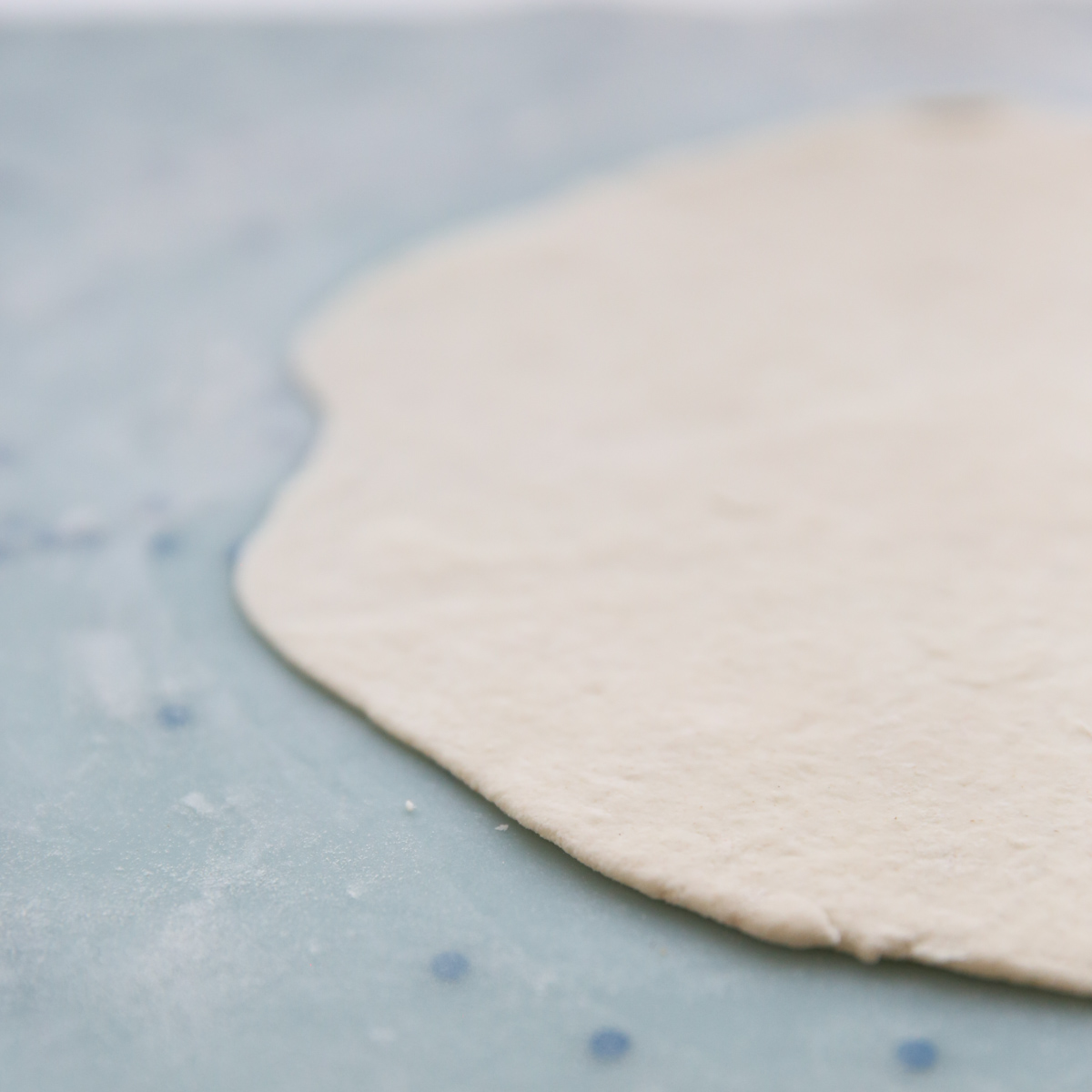
- Divide into small pieces and roll out thin.
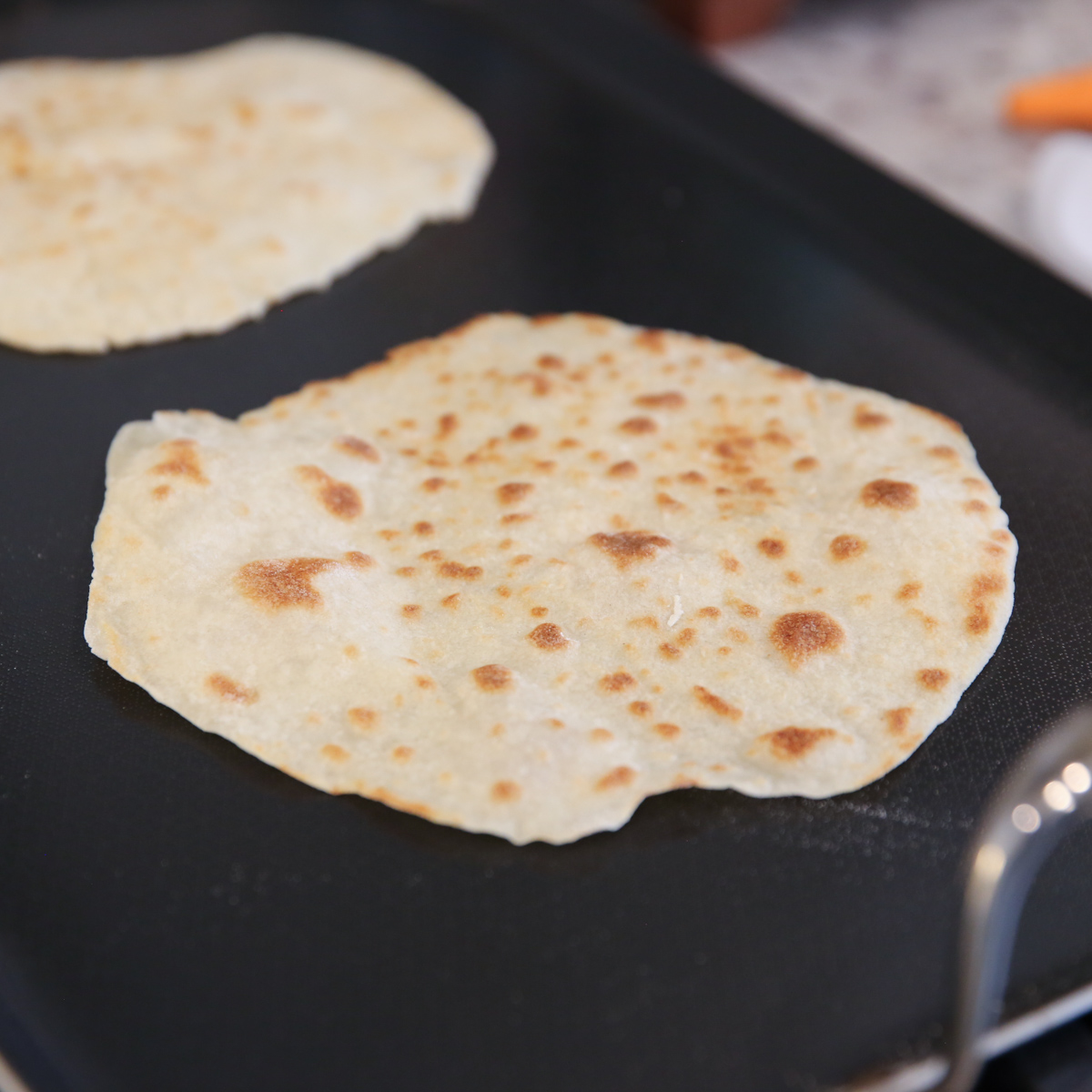
- Cook in a dry skillet until golden.
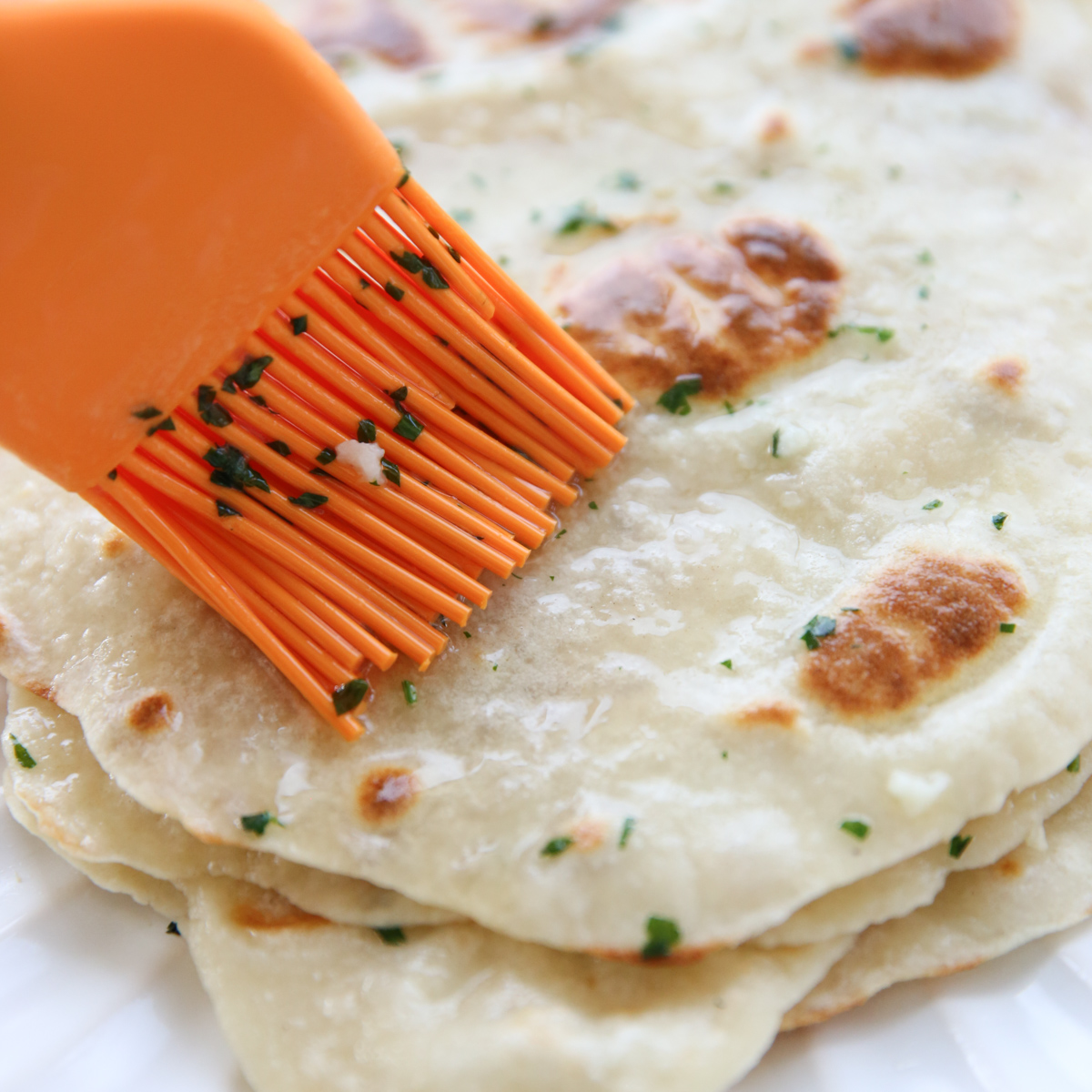
- Brush hot flatbreads with melted garlic butter.
Storing, Freezing, and Re-Heating Flatbread
- Short Term: cooked flatbreads can be stacked and wrapped in foil to stay warm for a few hours.
- Overnight: layer flatbreads between sheets of parchment and place in a zip top bag or airtight container in the fridge. To reheat, either a single or a stack of flatbreads, wrap in damp paper towels and microwave. They take about 30 seconds alone and a little more for a stack.
- Freezer: Stack cooked and cooled flatbreads between sheets of parchment and place in a ziptop bag and freeze. To reheat, grab a single flatbread and wrap in a damp paper towel. Heat for 60-90 seconds. Reaheat a stack of flatbreads the same way, increasing time in 30 second intervals until all are heated through.
Frequently Asked Questions
Greek yogurt brands vary in moisture and consistency so dough texture can vary quite a bit, too. If your dough feels too sticky, sprinkle in more flour a tablespoon at a time while kneading. Avoid adding too much or the flatbread will turn dense. It should still be tacky to the touch, but not actually stick to your hands. I purposely keep flour on the lower end to allow for additional flour when rolling and shaping.
I include oil because it helps improve the texture and flexibility. It keeps the cooked flatbreads tender, makes it easier to roll thin, and prevents it from becoming tough after cooking. You can leave out the oil if you like, but the breads will be best fresh and lack a little flexibility and tenderness.
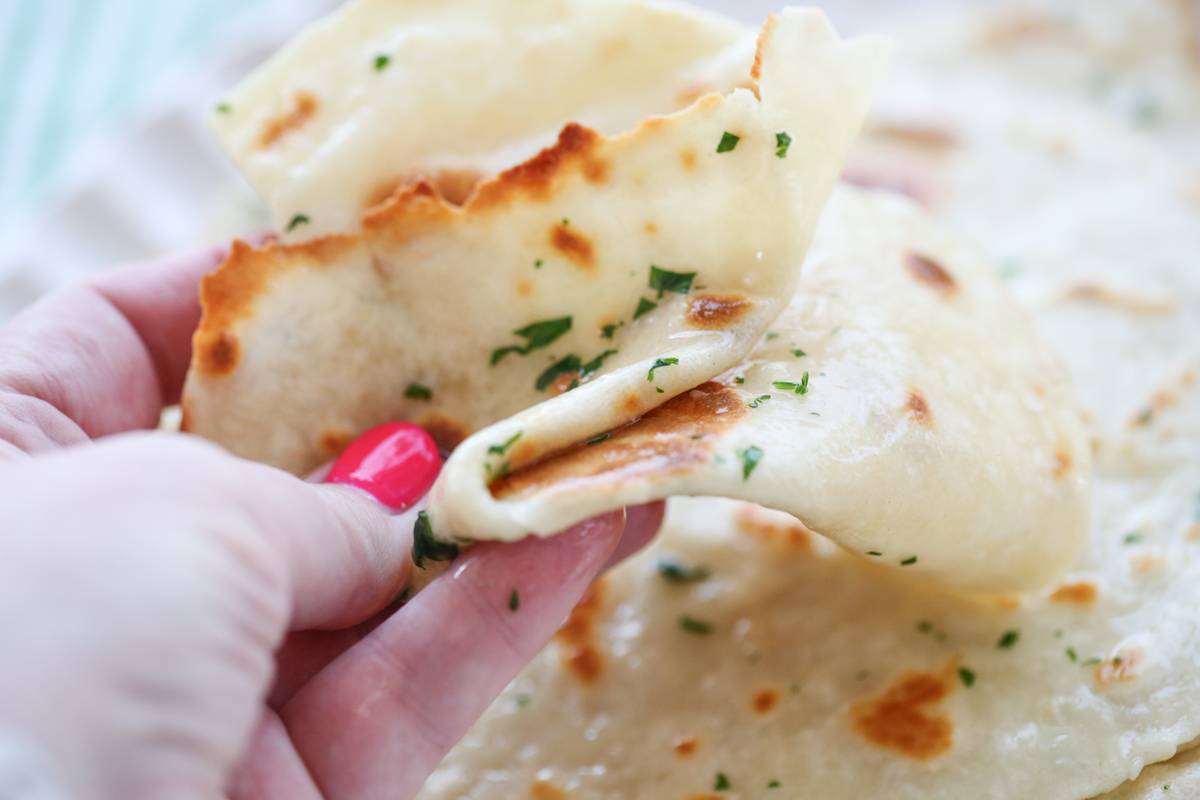
Yes. Cooked flatbreads can be stacked, wrapped, and stored at room temperature or several hours or refrigerated in an airtight container for a couple of days. My favorite way to reheat is to wrap in a damp paper towel. I think the gentle steam while reheating makes them even softer.
Easy Yogurt Flatbread (Skillet Recipe)
Ingredients
- 1 cup all purpose flour plus more as needed
- 1 teaspoon baking powder
- ½ teaspoon sea salt
- 1 cup plain (unflavored) Greek yogurt I like 2%
- 2 teaspoons olive oil
Garlic Butter
- 2 tablespoons butter
- 1 clove garlic pressed or microplaned
- 1 teaspoon minced fresh parsley optional
Instructions
Mix Dough
- Combine flour, baking powder and salt in a mixing bowl and stir to combine.
- Add Greek yogurt and olive oil.
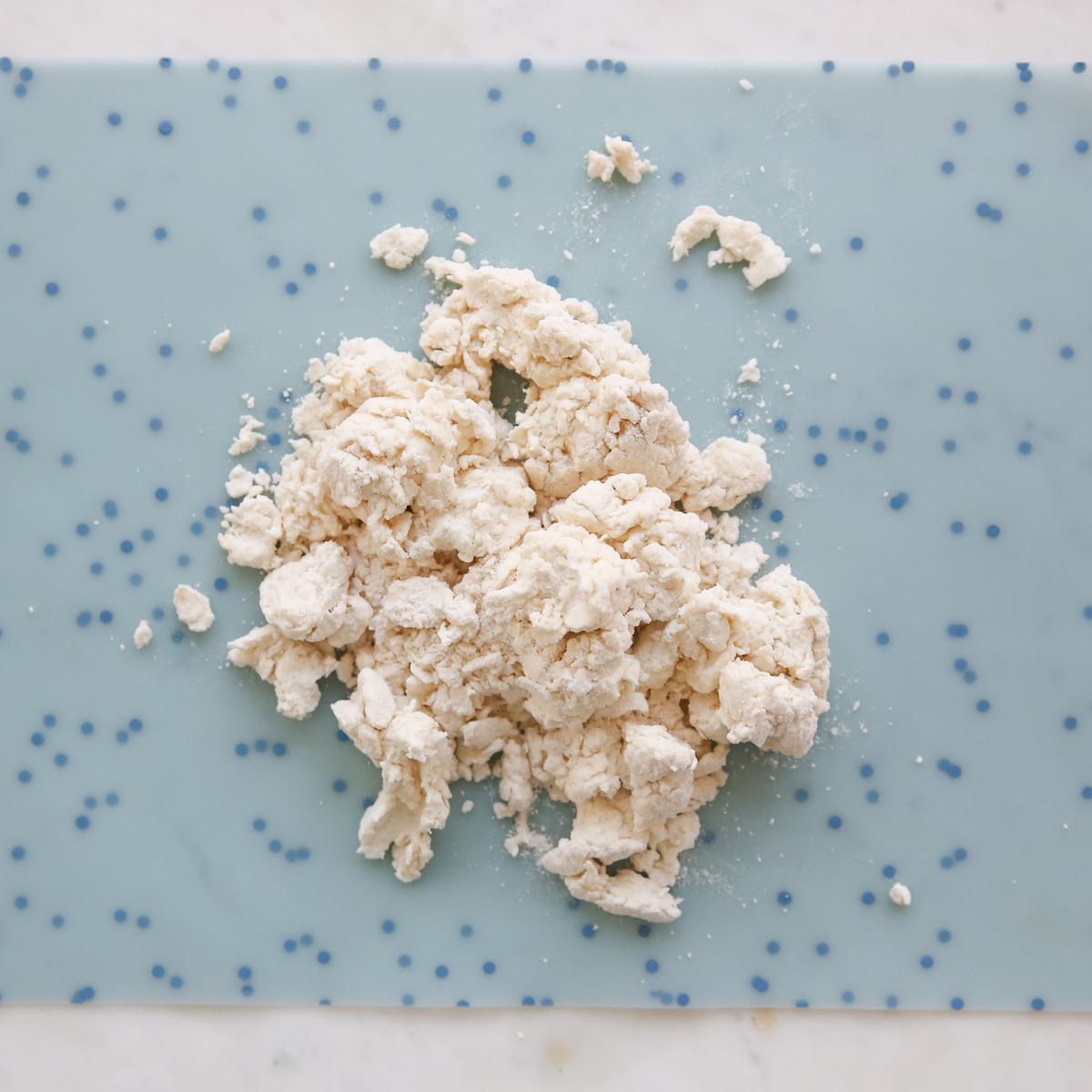
- Stir until it becomes a shaggy dough forms and then turn it out onto a lightly floured surface or my favorite- a silicone mat.
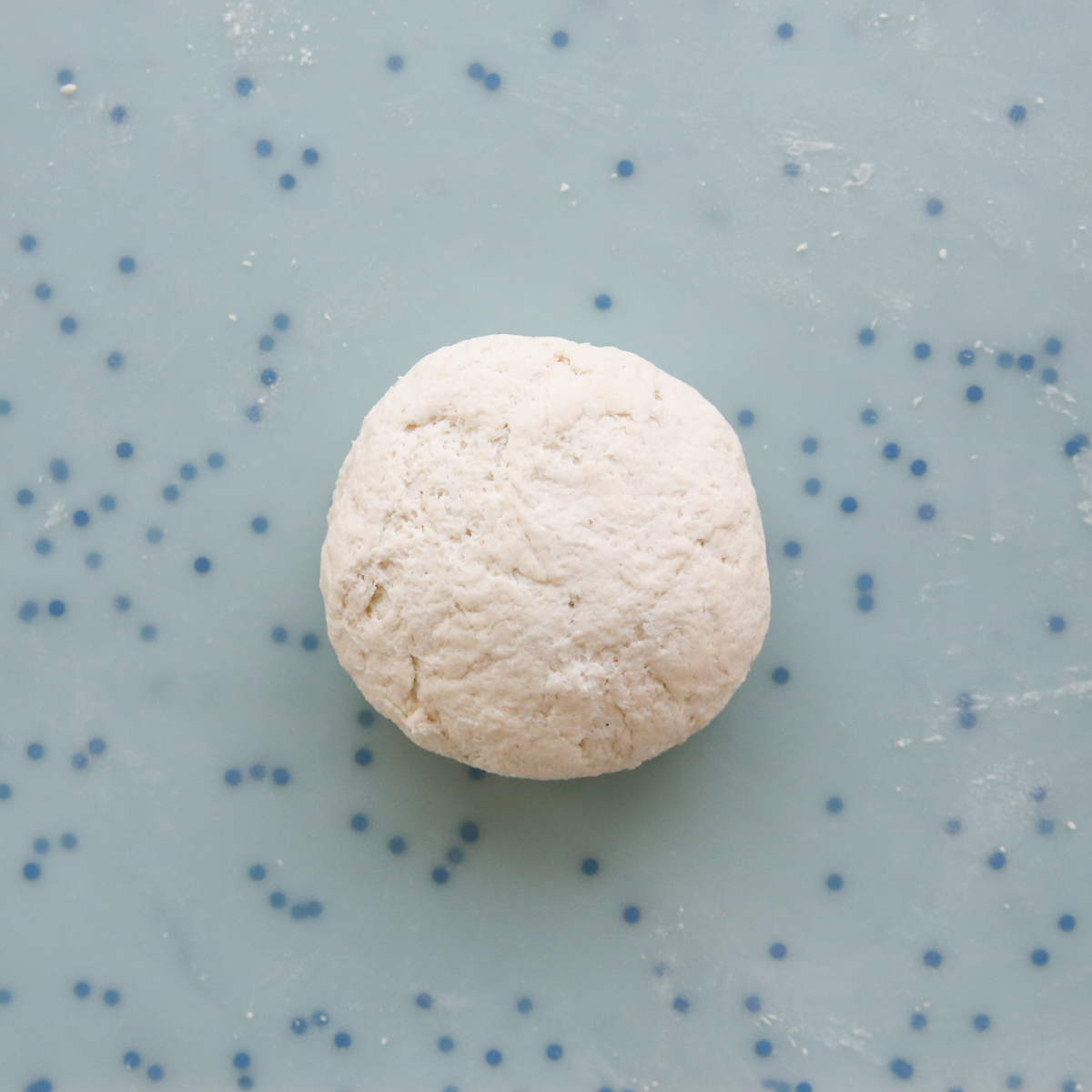
- Knead by hand just until smooth and you have a cohesive dough you can form into a round. The dough should be soft, pliable, and a bit tacky, but not sticky. If it's too wet and sticking to your hands in clumps, add additional flour, one tablespoon at a time as needed. Let dough rest for 15-20 minutes.
- While dough is done resting, place butter, garlic, and parsley in a small heat-safe bowl and heat for 30 seconds or until melted. Set aside.
Shape Dough
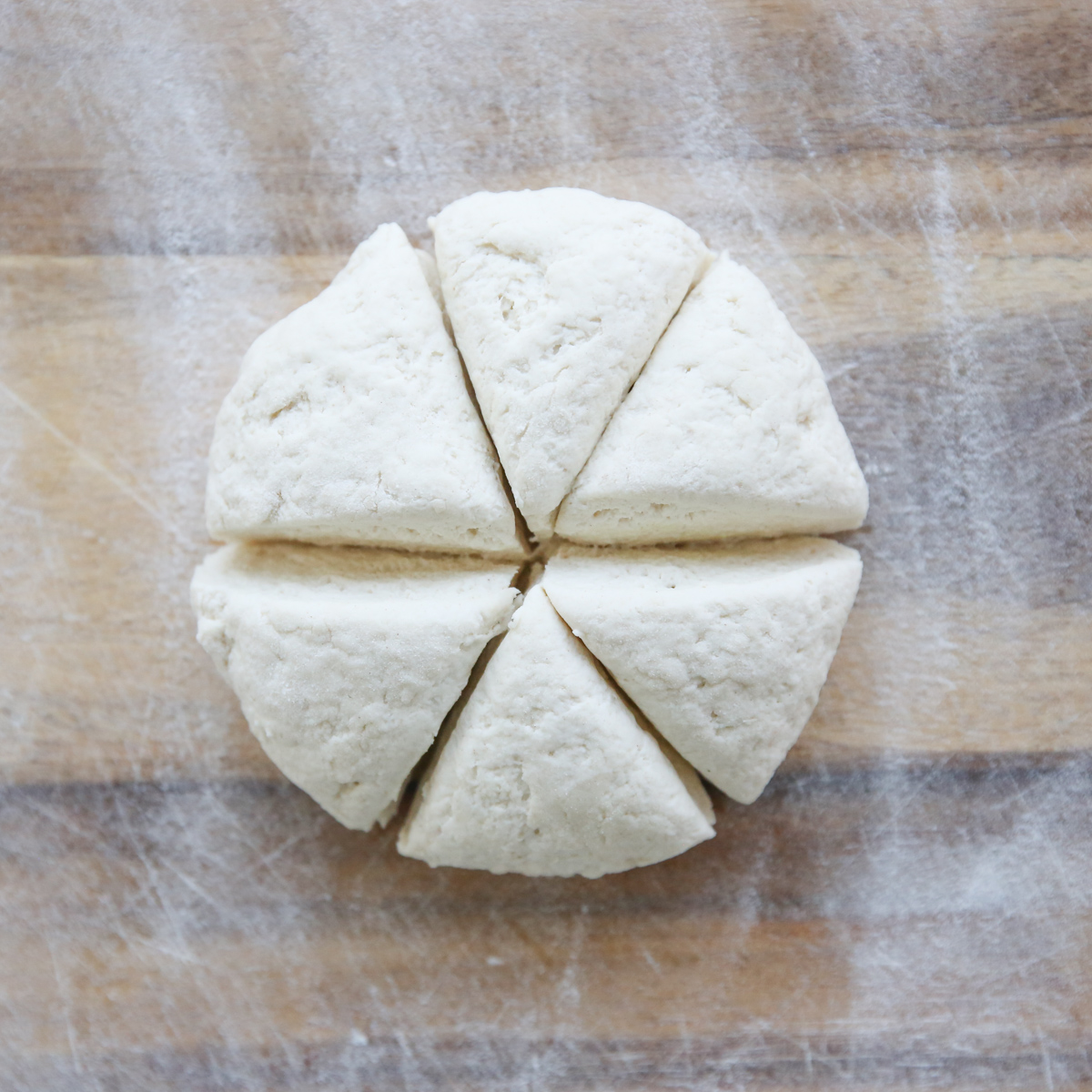
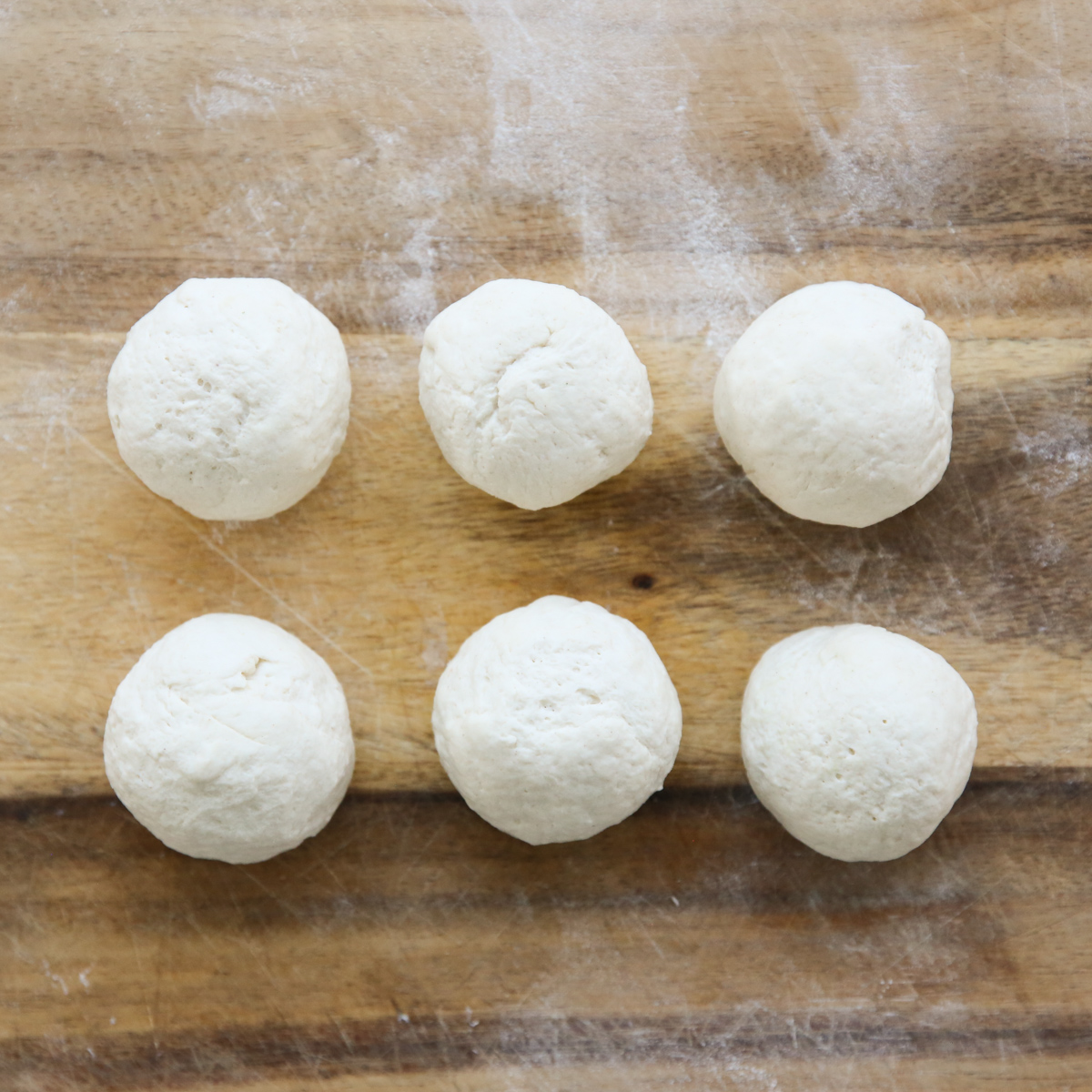
- Preheat a skillet or griddle to medium/medium-low heat while you prep your dough.Divide dough into 6 even pieces.
- Taking one dough ball at a time on your silicone mat or a lightly floured cutting board, roll out into a flat circular-ish shape. I aim for about the thickness of a tortilla.
Cook Dough
- Place flatbreads one at a time in the dry pan. Cook until top starts bubbling and bottom has golden brown spots. Flip and cook the other side the same way. It should take less than a minute per side.
- Remove bread from pan and transfer to a plate. Brush top side with the melted garlic butter and cover with foil to keep warm. Continue with the remaining flatbreads, placing each one directly on top of the other and brushing just the top side lightly with butter.
- Serve warm or cool and save.
Notes
- Short Term: cooked flatbreads can be stacked and wrapped in foil to stay warm for a few hours.
- Overnight: layer flatbreads between sheets of parchment and place in a zip top bag or airtight container in the fridge. To reheat, either a single or a stack of flatbreads, wrap in damp paper towels and microwave. They take about 30 seconds alone and a little more for a stack.
- Freezer: Stack cooked and cooled flatbreads between sheets of parchment and place in a ziptop bag and freeze. To reheat, grab a single flatbread and wrap in a damp paper towel. Heat for 60-90 seconds. Reaheat a stack of flatbreads the same way, increasing time in 30 second intervals until all are heated through.